

 GMA Brandtalk
 Tracking
 Archives

Marcos SONA 2026: Promises made, delivered, expectations, and everything you need to know

What a difference a year makes.
When the clock strikes four on Monday afternoon, July 27, 2026, President Ferdinand "Bongbong" Marcos Jr. will once again ask the Filipino nation to look back with pride—and to the future with hope. His fifth trip to the plenary podium at the House of Representatives, however, will be under unique circumstances.
In his previous SONA in 2025, Marcos spoke emphatically against corruption towards the end of his address. "Mahiya naman kayo (You should be ashamed)," the President said, a signature line that opened the floodgates to investigations seeking to weed out those who pocketed taxpayers' money from flood control projects.
While the President feels that he blew the lid on the multibillion-peso corruption scandal, the Marcos administration has been beset with questions over the past year about its sincerity and alleged selectiveness in pursuing justice. Asked if he will be tackling corruption during his fifth SONA, the President on Friday said, "Abangan ang susunod na kabanata (Stay tuned for the next chapter)."
Indeed, the nation will be watching. Looking at the most recent survey results, a good number of Filipinos may need some convincing. Marcos enters his fifth SONA with a record-low trust rating of 34%, according a June 20 to 29, 2026 commissioned survey of the Social Weather Stations (SWS). His trust rating is even lower in the latest Pulse Asia survey at 28%, conducted on June 28 to July 3 and July 6, 2026.
Meanwhile, some key economic numbers won't be in Marcos' favor either. On the last trading day heading into the day of the 2026 SONA, the Philippine peso hit rock bottom yet again, trading at a fresh historic-low of P61.847:$1. Inflation has shot up nearly fivefold since June 2025, from 1.4% to 6.4% a year later. This was largely because of the effects of the Middle East crisis, which also exposed yet again the Philippines' dependency on oil imports from the region.
The business sector was bullish after the Philippines achieved its long-awaited goal of being classified as an upper-middle income economy, but critics continue to ask if this translates to tangible benefits for ordinary Filipinos.
In this critical time in Philippine history, GMA News Online presents this special webpage on Ferdinand "Bongbong" Marcos Jr.’s 2026 State of the Nation Address. The GMA News Online team looked into the Marcos administration's performance in key sectors since the President's previous address to remind Filipinos of what he promised, what his government delivered, and what they may look out for on Monday and the days ahead.
One thing was clear from the 2025 SONA: Words from the President during his address to both House of Congress carry weight, and the power to set things in motion. How the President uses his platform on the 2026 SONA may be a tipping point—not just in the fight against corruption or to flex political muscle—but to move the bureaucracy and the nation towards positive change. —Val Veneracion/ RSJ, GMA News
Read more with these GMA News Online reports:

Only 2 of 53 Marcos priority bills enacted a year into 20th Congress
By Sundy Locus, GMA News
The Marcos administration’s legislative agenda has seen limited progress nearly a year into the 20th Congress, with only two of the 53 priority bills endorsed by the Legislative-Executive Development Advisory Council (LEDAC) enacted into law.
In March, President Ferdinand “Bongbong” Marcos Jr. signed into law Republic Act (RA) No. 12317, resetting the inaugural Bangsamoro parliamentary elections to September 14, 2026.
Marcos likewise signed RA No. 12316 into law, which granted him emergency powers to suspend or reduce the excise tax rate on petroleum products amid the rising fuel prices in the country due to the US-Israel war on Iran.
However, these are only two of the 53 priority bills of the Marcos administration, with a huge chunk of the proposed measures remaining pending at the committee levels of both the Senate and the House of Representatives.
Click here to read more
Data from GMA News Research found that one bill — the Amendments to the Universal Access to Quality Tertiary Education Act — is now one step away from becoming law after the bicameral conference committee approved it.
Four LEDAC bills are pending in the bicameral conference committee, while 20 are still pending at the committee levels of both chambers.
The status of the 53 priority measures identified by LEDAC is as follows:
Passed into law
- RA 12316: Authorizing the President to Suspend or Reduce Excise Tax on Petroleum Products
- RA 12317: Resetting the First Regular Elections in the Bangsamoro Autonomous Region in Muslim Mindanao (BARMM)
Pending enrolment
- Amendments to the Universal Access to Quality Tertiary Education Act
Pending Bicameral Conference Committee
- National Center for Geriatric Health
- Amendments to the Government Assistance to Students and Teachers in Private Education Act / Basic Education Voucher Program Act
- People’s Freedom of Information Act / Right to Information Act
- Assistance to Individuals in Crisis Situations (AICS) Act
Passed by Senate, pending at House committee level
- Classroom-Building Acceleration Program (CAP) Act
- Citizen Access and Disclosure of Expenditures for National Accountability (CADENA) Act
Passed by House, pending at second reading in Senate
- Amendments to the Bank Deposits Secrecy Law / Banking Reform for Integrity, Good Governance, Honesty, and Transparency (BRIGHT) Act
- Amendments to the Anti-Online Sexual Abuse or Exploitation of Children (OSAEC) and Anti-Child Sexual Abuse or Exploitation Materials (CSAEM) Act
- Anti-Political Dynasty Bill
- Amendments to the Masustansyang Pagkain Para sa Batang Pilipino Act / National Nutrition Program
- Amendments to the Biofuels Act / Oil Price Stabilization Act
Passed by House, pending at Senate committee level
- Amendments to the Electric Power Industry Reform Act (EPIRA) – Energy Regulatory Commission (ERC)
- Waste-to-Energy Bill / Waste Treatment Technology Act
- Estate Tax Amnesty
- Travel Tax Abolition Act
- Department of Water Resources
- Amendments to the Pantawid Pamilyang Pilipino Program (4Ps) Act
- Digital Media Anti-False Information Act
- National Reintegration Bill / Bagong Balikbayan Act
- Amendments to the Teachers Professionalization Act
- Amendments to the National Building Code
- Blue Economy Act
- Digital Payments Act / eBayad Act
- Presidential Merit Scholarship Act
- National Land Use Act
- Strengthening the Bases Conversion and Development Authority (BCDA)
Pending second reading in Senate, House
- Party-list System Reform Act
- Independent People’s Commission Act
- Disqualifying Relatives of Officials (4th degree) in Government Contracts / Government Contracting and Procurement Integrity Act
- Requiring Civil Servants to Waive Bank Secrecy
Pending at Senate, House committee level
- Amendments to the Rice Tariffication Law / Rice Industry and Consumer Empowerment (RICE) Act
- Amendments to the Coconut Farmers and Industry Trust Fund Act
- Reprogramming of Seal of Good Local Governance (SGLG)
- Modernizing the Bureau of Immigration
- Amendments to the Magna Carta for Micro, Small, and Medium Enterprises (MSMEs)
- Disaster Risk Financing Insurance
- Progressive Budgeting for Better and Modernized Governance Act / Philippine Budgeting Code (PBC)
- Law on Online Gambling
- Magna Carta for Barangays
- Amendments to the Fisheries Code
- Philippine Civil Registration and Vital Statistics Act
- Fair Use of Social Media, AI and Internet Technology in Elections
- Amendments to the Downstream Oil Industry Deregulation Law
- Amendments to the Anti-Money Laundering Act (AMLA)
- Excise Tax on Single-Use Plastics
- Amendments to the Local Government Code (LGC)
- Amendments to the Universal Health Care (UHC) Act
- Cybersecurity Act
- Masterplan for Infrastructure and National Development (MIND)
- General Tax Amnesty
The number of enacted priority measures in the first year of the 20th Congress was significantly lower than the 40 LEDAC-backed bills in the 19th Congress. Of the figures, 27 measures were aligned with the legislative agenda under the Philippine Development Plan (PDP) 2023-2028 and 21 were SONA priority bills of the Marcos administration. —With GMA News Research/LDF, GMA News
How is the Marcos admin faring in terms of poverty alleviation?
By Giselle Ombay, GMA News
A year has passed since President Ferdinand “Bongbong” Marcos Jr., in his 2025 State of the Nation Address (SONA), committed to continue fighting poverty and hunger in the country by creating more decent jobs and supporting small businesses.
In his fourth SONA, the President said that the Department of Labor and Employment (DOLE), Department of Trade and Industry (DTI), Department of Social Welfare and Development (DSWD), and Department of Tourism (DOT), along with other agencies, would intensify efforts to generate opportunities for the 4% of the workforce who then remained unemployed.
How is the government faring now in fulfilling this promise?
Click here to read more
He also vowed to offer low-interest-bearing and non-collateralized capital so that those in need could start small businesses or microenterprises.
“Para sa mga tinataguyod natin mula sa kahirapan, patuloy tayong nagbibigay ng libreng training at puhunan para makapagtayo sila ng sariling negosyo,” Marcos said last year.
(For those we are lifting out of poverty, we will continue to provide you with free training and capital so you can start your own businesses.)
“Hindi tayo titigil hanggang halos dalawa’t kalahating milyong maralitang pamilya ay matutulungan natin na magkaroon ng kanilang sariling maliit na negosyo,” he added.
(We will not stop until we have helped almost 2.5 million poor families start their own small businesses.)
The President also committed to strengthening various industries, like automotive, manufacturing, electronics, biotechnology, pharmaceuticals, critical minerals, local textiles, halal products, construction, and power generation.
He also made a resounding call to the international business community to invest in Filipinos.
“The Philippines is ready. Invest in the Filipino. Our cavalcade of dependable and hardworking Filipinos, innately skilled, adaptable, and possessed with a heart for service, are here, ready to work and to succeed with you,” Marcos stressed.
But a year later, millions of Filipinos remain unemployed and consider themselves poor.
Based on a Social Weather Station (SWS) survey conducted in late March 2026, 52% or 14.5 million Filipino families identify themselves as "poor.”
This was one percent higher than the 51% recorded in November 2025.
Of the estimated 14.5 million self-rated poor families in March 2026, 1.9 million were newly poor, 2.7 million were usually poor, and 9.9 million were always poor.
Meanwhile, a survey by the Philippine Statistics Authority (PSA) showed that 2.5 million Filipinos, ages 15 and above, were without jobs or livelihoods in May 2026.
This was higher than the 2.41 million jobless individuals in April, and the 2.03 million in May 2025. This translated to an unemployment rate of 4.8% in May 2026, also higher than 4.7% in April 2026 and 3.9% in May 2025.
Interventions
Now, what is the Marcos administration doing to address the country’s perennial problems in poverty and unemployment?
Malacañang said the government remains committed to creating quality and productive jobs for Filipinos, attracting investments, and providing livelihood opportunities to displaced workers and returning overseas Filipino workers.
DOLE, for its part, said that it is also strengthening labor education for graduating students and expanding its nationwide job fairs to help unemployed and underemployed individuals.
The agency said it is also enhancing partnerships with the Technical Education and Skills Development Authority (TESDA) to improve skills development, and is integrating entrepreneurship interventions into the Tulong Panghanapbuhay sa Ating Disadvantaged/Displaced Workers (TUPAD) program for disadvantaged and displaced workers.
Notably, the government also continues to implement its national poverty reduction strategy and human capital investment program through the Pantawid Pamilyang Pilipino Program (4Ps).
In May, the DSWD said around 1.4 million families have already “graduated” from the 4Ps since 2022, prompting the government to restore only 500,000 beneficiaries as part of a recalibrated anti-poverty effort under the Marcos administration.
The DSWD also began rolling out recently an expanded First 1,000 Days cash grant package, increasing the monthly benefit for qualified 4Ps beneficiaries from P350 to P750.
Due to the impacts of the Middle East conflict, the government also decided to expand the United Package for Livelihoods, Industry, Food, and Transport (UPLIFT) program, providing financial assistance to indigent Filipinos affected by rising prices of fuel and other commodities.
The DSWD said that this program will also cover tax-paying near-poor earners and not just the poorest, targeting to benefit a total of 7.5 million households or 37.5 million individuals.
Likewise, the DSWD is also continuously implementing the Walang Gutom program, which seeks to address involuntary hunger among low-income households.
Under the Bawat Bayan Makikinabang program, the government also distributes 10-kilogram sacks of rice to select beneficiaries, which include farmers, fisherfolk, senior citizens, solo parents, and low-income earners.
Water, power services
Marcos’ commitment to improving the lives of Filipinos also does not stop with these interventions, as access to clean water and reliable energy remain crucial.
In his previous SONA, the President issued a stern warning to water service providers and their joint venture partners who were liable for the water service interruptions in several parts of the country.
Despite government projects aimed at providing clean and safe water supply, he said many consumers had complained that water was not reaching their taps.
“Sa lawak ng reklamo, lampas anim na milyong konsyumer sa buong bansa ang kasalukuyang naaapektuhan. Nakita ko na ang report,” the President said in his 4th SONA.
(Over six million consumers nationwide are affected because of this issue. I have already seen the report.)
“Titiyakin nating mapapanagot ang mga nagpabaya at nagkulang sa mahalagang serbisyong-publiko na ito,” he added.
(We will ensure that those who were negligent or fell short in delivering this essential public service will be held accountable.)
According to Marcos, the Local Water Utilities Administration (LWUA) would address the water supply issues concerning water districts and their joint venture partners.
Currently, Malacañang said the government continues to implement measures to improve water services nationwide, including developing new water sources, expanding water networks, and studying legal remedies against water districts and joint venture partners that fail to fulfill their obligations.
The LWUA and the Asian Development Bank (ADB) are also jointly implementing a P1.99-billion Water District Development Sector Project to strengthen water districts and improve water services across the Philippines.
Last year, the President also lamented that three million households did not have electricity, and many Filipinos still suffered from high power costs despite experiencing frequent brownouts.
He thus vowed to provide electricity to at least one million more homes by 2028 through the use of solar power home system.
But because of the conflict in the Middle East, which escalated in February, global supply chains were affected, and the country’s energy sector faced power disruptions and supply shortages that directly affected consumers.
In March, Marcos declared a state of national energy emergency, directing and authorizing the Department of Energy (DOE) to take appropriate measures to safeguard the stability and adequacy of the country's energy supply and mitigate the adverse effects of disruptions in global energy supply markets.
Come June, DOE reported that the Philippines had the most expensive electricity rates among the member countries of the Association of Southeast Asian Nations (ASEAN) due to low supply and high demand recorded during the month.
Malacañang said the President has given orders to build new power plants to increase energy production, expand the transmission network, and implement measures to address issues delaying the construction of submarine cables and transmission lines.
Marcos has also called for action on power-related concerns, including those of the National Grid Corporation of the Philippines (NGCP).—AOL, GMA News

A year after SONA 2025: Have Marcos' agricultural promises borne fruit?
By Ted Cordero, GMA News
During his 2025 State of the Nation Address (SONA), President Ferdinand "Bongbong" Marcos Jr. highlighted agricultural development as among his administration's top priorities and even brought to light his campaign promise of bringing down the retail price of rice to P20 per kilo.
“Sa mga nagtatanong kung ‘nasaan na ang bente pesos na bigas?’ Ito ang aking tugon.
Napatunayan na natin na kaya na natin ang bente pesos sa bawat kilo ng bigas, nang hindi malulugi ang ating mga magsasaka,” Marcos said in his SONA last year.
(To those asking, 'Where is the P20-per-kilo rice? Here is my reply. We have proven that we can do P20 rice without our farmers getting shortchanged.)
“At dahil sa ilalaan nating isandaan at labintatlong bilyong piso upang palakasin ang mga programa ng DA, ilulunsad na natin ito sa buong bansa sa pamamagitan ng daan-daang KADIWA store at center sa iba't ibang lokal na pamahalaan,” the President said.
(And because of the P113 billion we have allocated to strengthen the Department of Agriculture's programs, we will launch this nationwide through our hundreds of Kadiwa stores and centers in different local governments.)
On Wednesday, the DA said that the government has generated P2.4 billion in sales since it launched the P20 per kilo rice initiative in May last year.
Click here to read more
“In just over a year, the program generated P2.4 billion in sales after distributing 121,271 metric tons of rice to an estimated 12.1 million beneficiaries, underscoring the strong demand for affordable staple food amid elevated living costs,” the DA said.
The P20 per kilo rice initiative provides subsidized rice to vulnerable sectors, including senior citizens, persons with disabilities, solo parents, minimum wage earners, public transport workers, indigents, and registered farmers and fisherfolk.
There are currently 805 active Benteng Bigas selling sites nationwide, including 295 with regular selling schedules.
Tackling pork prices
Marcos also touched on the issue of high pork prices as a result of declining production amid the African Swine Fever (ASF) outbreak.
“Bilang pangunahing solusyon sa mataas na presyo ng baboy, pinalalakas natin ang ating lokal na produksyon. Namimigay tayo ng mga biik at inahin. Nagpapatayo rin tayo ng mga biosecure facilities. Upang lubos na pababain ang presyo ng karne, nagsimula nang magbakuna laban sa ASF, at palalawigin pa natin ito ng pagbabakuna sa lahat,” he said in his SONA last year.
(As the primary solution to high pork prices, we have strengthened our local production. We have distributed piglets and sows. We have also put up biosecure facilities. In order to bring down pork prices further, wee have also started vaccinating hogs against ASF, and we will expand this program.)
Data from the Philippine Statistics Authority (PSA), however, showed that livestock production in 2025 declined by 2.2% to 2.13 million metric tons, largely due to drop in hog production by 2.7% year-on-year.
In January to March 2026, hog production slipped to its lowest level since 1994 at 8.7 million heads, down from 8.84 million heads year-on-year.
PSA data, meanwhile, showed that the average retail price of fresh pork kasim stand at P339.43 per kilo as of early July, down from P374.89 per kilo in the same period in 2025.
ASF vaccination, on the other hand, is not yet approved for commercial sale in the country and is currently under a controlled rollout and monitored distribution pending final commercial licensing from the Bureau of Animal Industry.
Slight improvement in coconut production
In his SONA last year, Marcos said he would ask Congress to amend the Coconut Farmers and Industry Trust Fund Act to make it more responsive to the needs of farmers and boost exports.
“Milyon-milyong Pilipino ang umaasa sa puno ng niyog bilang pangunahing kabuhayan. Mula ngayong taon, hindi bababa sa labing-limang milyong hybrid at mataas na klaseng mga binhi ng niyog ang ating itatanim sa iba't ibang panig ng Pilipinas. At itutuloy natin ito hanggang isandaang milyong puno na ng niyog ang ating maitatanim sa buong Pilipinas,” Marcos said.
(Millions of Filipinos rely on coconut trees as their primary source of livelihood. Starting this year, we will plant no fewer than 15 million hybrid and high-quality coconut seedlings across the country. And we will continue this until we reach 100 million coconut trees planted throughout the Philippines.)
Data from the PSA as of end 2025 showed coconut production reached 14.506 million metric tons, slightly higher than 14.5 million MT in 2024.
The proposed amendments to the Coconut Farmers and Industry Trust Fund Act are still pending in both chambers of Congress at committee level.
Sector’s 'wishlist'
Samahang Industriya ng Agrikultura (SINAG) executive director Jayson Cainglet, in a statement sent to GMA News Online, said the group recognizes and supports the efforts of the current DA.
"Years of neglect have left Philippine agriculture with enormous challenges, and rebuilding the sector is no small task," Cainglet said.
The SINAG executive director, however, pointed out that efforts are being undermined by the continued push to further liberalize agricultural trade through lower tariffs and greater importation.
"Let us finally debunk the myth. More imports do not automatically translate into lower retail prices. Years of experience have shown that import dependence has failed to deliver lasting price stability. Instead, it has weakened local production, discouraged investment in agriculture, and made the country increasingly vulnerable to global supply disruptions and international price shocks," Cainglet said.
"A nation that cannot produce its own food cannot achieve genuine food security. The future of Philippine agriculture depends on restoring confidence in our farmers, protecting local production, and ensuring that imports complement—rather than replace—our own capacity to feed the nation," the SINAG official said.
Cainglet said SINAG is calling for the immediate restoration of the original tariff schedules for rice, corn, pork, chicken, and other essential agricultural commodities as well the establishment of fully equipped First Border Inspection and Quarantine Facilities at all major ports to ensure 100% inspection of all imported agricultural products.
Meanwhile, Philippine Chamber of Agriculture and Food Inc. (PCAFI) president Danilo Fausto said the group is pushing for “transparency in the process of adjusting tariffs.”
"The Tariff Commission must publish its findings of facts so that there is confidence that the tariff adjustments are based on data and not on ideological or doctrinal biases," Fausto said.
The PCAFI chief also called for strengthening the agricultural export development office of the DA "including budget appropriation and scaled-up organizational structure to increase its capacity to expand agricultural product exports."
DA budget for 2027
To continue the government’s efforts for the drive the country’s farm sector, Agriculture Secretary Francisco Tiu Laurel Jr. said the DA is seeking a P250-billion budget for 2027, higher than this year’s P215-billion allocation.
Tiu Laurel said next year’s funding is supporting farm mechanization, irrigation, research laboratories, hatcheries, cold-chain facilities, digital infrastructure and post-harvest systems designed to improve productivity while reducing losses and food costs.
“Investment is where reform begins… It buys tractors instead of excuses, it builds irrigation instead of promises,” the Agriculture chief said at a forum organized by the Economic Journalists Association of the Philippines (EJAP).
Tiu Laurel said that the expanded Rice Competitiveness Enhancement Fund, funded at P30 billion annually, will continue to support for machinery, certified seeds, solar irrigation, cash assistance, production inputs, and affordable credit.
The Marcos administration also increased funding to the Philippine Crop Insurance Corp. by P2 billion this year, and may approve an additional for 2027 to cover more farmers and fisherfolk.
The Animal Industry Development and Competitiveness Act is likewise channeling P20 billion annually to rebuild the livestock sector, particularly the hog industry devastated by African swine fever.
The Agriculture chief noted that investments are beginning to yield results as agriculture and fisheries expanded 2.6% in 2025, their fastest growth in eight years, while gross value added rose 3.1% despite erratic weather and lingering animal diseases. — BM/ VDV, GMA News
Where Marcos' flagship infrastructure projects stand, one year after SONA 2025
By Jon Viktor D. Cabuenas, GMA News
President Ferdinand "Bongbong" Marcos Jr. last year vowed to sustain his administration's infrastructure drive, saying some flagship projects would be completed beyond his six-year term as investments for the country's future.
"Asahan ninyo, magpapatuloy ang malawakang programang pang-imprastraektura ng administrasyon. Ang mga naglalakihang proyekto ay nakalatag sa buong kapuluan. Mga daan, tulay, tren, paliparan, pantalan, patubig, at murang pabahay," Marcos said in his 2025 State of the Nation Address (SONA).
(Rest assured, the administration's extensive infrastructure will continue. Major projects are being rolled out across the archipelago—roads, bridges, railways, airports, seaports, irrigation systems, and affordable housing.)
"Ilan dito, matatapos ngayong administrasyon na ito. Ang iba naman, makukumpleto pa at mararamdaman ang dalang ginhawa pagkatapos pa ng aking termino. Nagpupundar po kasi tayo para sa kinabukasan. We are not building only for today, we are building also for tomorrow," he added.
(Some of these will be completed within this administration, while others will be finished and their benefits will be felt after my term. We are investing for the future. We not building only for today, we are building also for tomorrow.)
A year later, however, the Marcos administration's infrastructure spending has slowed.
Click here to read more
Latest data from the Department of Budget and Management (DBM) show that infrastructure and other capital outlays stood at P41.5 billion in April 2026, reflecting a 52% drop from the P85.8 billion the same month a year ago, marking the 10th straight month of decline after the flood control corruption scandal jolted the bureaucracy.
This brought the year-to-date infrastructure spending to P189.3 billion, down 45.6% from P347.6 billion, as the DBM said the turnaround times for payments processing were extended due to review procedures.
"The contraction was attributed to the weak spending performance of the Department of Public Works and Highways (DPWH) as the implementation of its current year's budget and completion of prior years' projects are still ongoing, while the processing of payment claims undergoes stringent validation procedures," the DBM said.
While several flagship infrastructure projects specifically mentioned by Marcos in his latest SONA have continued to move forward, progress has been mixed.
Bataan-Cavite Interlink Bridge
SONA 2025: "Bago matapos ang taon, magsisimula na ang Bataan-Cavite Interlink Bridge. Ang tulay na ito ay tatlumpu't dalawang kilometro ang haba, na tumatawid ng Manila Bay. Kung ang biyahe ngayon mula Mariveles hanggang Naic ay umaabot ng limang oras, balang araw ito ay magiging apatnapu't limang minuto na lamang."
(Before the year ends, work will start on the Bataan-Cavite Interlink Bridge. This bridge will be 32 kilometers in length and will traverse Manila Bay. If today's trip from Mariveles to Naic lasts 5 hours, travel time will soon be reduced to 45 minutes.)
UPDATE: In November 2025, the DPWH awarded Package 2—which covers the 1.4-kilometer Cavite Land Approach—of the project to a consortium composed of China Wu Yi, Jinan Urban Construction Group Co. Ltd., and CM Pancho Construction Inc.
The DPWH in February 2026 awarded Contract Package 1 of the BCIB—which covers the 4.8-kilometer Bataan Land Approach—to a consortium of China Wu Yi Co. Ltd. and Fujian Road & Bridge Construction Group Co. Ltd.

Philippine National Railway (PNRs) Bicol Line
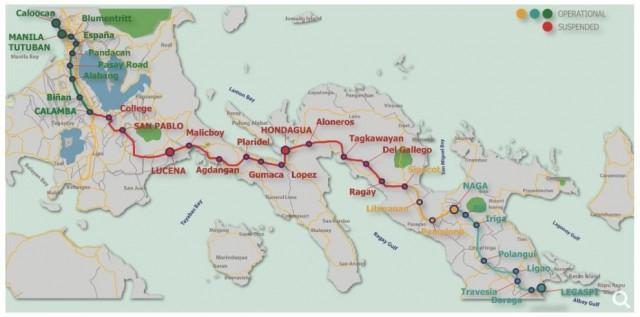
SONA 2025: "Ang mga riles ng PNR Bicol Line na sinira ng Bagyong Kristine ay unti-unti nating pinatitibay at naaayos na, kasama ang Binahan Bridge. Hindi magtatagal, madadagdagan pa ang haba ng linya na nito, at aabot na sa Ragay, Camarines Sur hanggang Tagkawayan, Quezon. Magiging malaking tulong ito sa ating motoristang nagdadaan sa malubhang trapik mula Quezon hanggang sa Bicol."
(The PNR Bicol Line railroad tracks which were destroyed by Tropical Cyclone Kristine are gradually being strengthened and repaired. This is the same for the Binahan Bridge. It won't be long before railway lines are added, reaching Ragay, Camarines Sur until Tagkawayan, Quezon. This will be a big help to motorists who currently endure heavy traffic from Quezon until Bicol.)
UPDATE: A route map on the PNR website accessed on Wednesday, July 22, shows that the line from College to Sipocot—which includes a station in Tagkawayan, Quezon—has been suspended.
South Luzon Expressway (SLEX) Extension
SONA 2025: "Sa 2026, inaasahang magbubukas na sa motorista ang bahagi ng extension ng SLEX mula Sto. Tomas, Batangas hanggang Tiaong, Quezon."
(In 2026, we expect the SLEX Extension from Sto. Tomas, Batangas until Tiaong, Quezon to be open to motorists.)
UPDATE: As of June 25, 2026, DPWH data showed that only the project's segment to Tiaong, Quezon was nearing completion.
Construction of Package A of the SLEX Phase II Project (Sto. Tomas to Makban) stood at 43.70%, Package B (Makban to San Pablo) at 77.42%, and Package C (San Pablo to Tiaong) at 95.54%.
_Extension_Phase_II_Toll_Road_4_(TR-4)_Project_Briefer_20260722_2026_07_22_18_13_58.png)
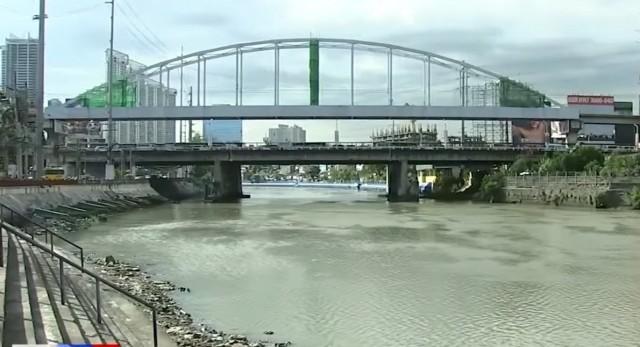
Guadalupe Bridge Rehabilitation
SONA 2025: "Ang rehabilitasyon ng Tulay ng Guadalupe ay sukdulan na ring kinakailangan. Nasa Senado pa ako ay pinag-uusapan na ito. Hindi ko papayagang tumawid pa ito sa susunod na administrasyon. Kaligtasan na ng publiko ang nakataya. Hindi po isasara ang Guadalupe Bridge. Gagawa muna tayo ng detour bridge sa magkabilang gilid bilang pansamantalang daanan. Kapag nagawa na at nabuksan na ang detour bridge na ito, doon pa lamang sisimulan ang trabaho sa main bridge."
(The rehabilitation of the Guadalupe Bridge is urgently needed. This was already being discussed when I was still in the Senate. I will not allow rehabilitation work to cross over to the next administration. Public safety is at stake. The Guadalupe Bridge will not be closed. We will make detour bridges on both sides as temporary detour routes. When the detour bridges are completed and opened, that's when work will commence on the main bridge.)
UPDATE: Former DPWH Secretary Manuel Bonoan in July 2025 said the rehabilitation of the Guadalupe Bridge could be deferred to 2027 to avoid disruptions during the country's hosting of the Association of Southeast Asian Nations (ASEAN) Summit 2026.
Mindanao Transport Connectivity Improvement Project (MTCIP)
SONA 2025: "Higit sa lahat, kung may Luzon Spine Expressway Network program, mayroon din naman tayong Mindanao Transport Connectivity Improvement Project. Sa proyektong ito, aayusin natin ang mga pangunahing daan na nag-uugnay sa Cagayan de Oro, sa Davao, General Santos, na may haba na apat na raan at dalawampu't walong kilometro."
(Most importantly, if there's a Luzon Spine Expressway Network program, we also have the Mindanao Transport Connectivity Improvement Project. With this project, primary roads connecting Cagayan de Oro with Davao, General Santos will be repaired. These roads are 428 kilometers long.)
UPDATE: According to the dashboard on infrastructure flagship projects by the Department of Economy, Planning, and Development (DepDev), the project has been "approved for implementation," with the target year of completion beyond 2028.
DPWH Secretary Vivencio "Vince" Dizon last year issued a special order that created the MTCIP Project Steering Committee, tasked with overseeing strategic implementation, inter-agency coordination, and periodic review of project milestones. — VDV, GMA News
_Courtesy_DPWH_MTCIP_Stakeholder_Engagement_Framework_2024_2026_07_22_18_15_27.jpg)

Marcos economic outlook meets mixed reality, a year after SONA 2025
By Jon Viktor D. Cabuenas, GMA News
In 2025, President Ferdinand “Bongbong” Marcos Jr. projected confidence in the Philippine economy as he cited easing inflation, improving employment, and growing business optimism. A year later, the country faces both internal and external headwinds.
"Kung datos lang ang pag-uusapan, maganda ang ating ekonomiya, tumaas ang kumpiyansa ng mga negosyante. Bumaba ang inflation, dumami ang trabaho,” he said in his State of the Nation Address (SONA) last year.
“Ngunit ang lahat ng ito ay palamuti lamang, walang saysay, kung ang ating kababayan naman ay hirap pa rin at nabibigatan sa kanilang buhay,” he added.
(If we look only at the data, our economy is doing well. Business confidence has increased. Inflation has eased, and employment has grown.
But all of these are merely ornaments, meaningless, if our people continue to struggle and carry heavy burdens in their daily lives.)
A year later, the Philippines has achieved a decades-long goal of being classified as an upper-middle income economy, reflecting an increase in gross national income per capita.
EXPLAINER: What the Philippines’ upper-middle-income status means for Filipinos
Other indicators, however, present a mixed picture.
Click here to read more
Inflation
Inflation—the rate at which consumer prices grow—stood at 1.4% in June 2025, a month before Marcos’ SONA last year.
This year, June's inflation is 6.4%. This is slower than the 6.8% in May, but still remains above the Bangko Sentral ng Pilipinas’ (BSP) target range of 2% to 4%. The central bank expects it to average 6.4% this year.
Inflation has largely been driven by higher global oil prices due to the conflict between the United States and Iran. The Philippines, a net fuel importer, in March declared a state of national energy emergency as the war shut the Strait of Hormuz, choking the world's global oil supply.
Economic growth
The gross domestic product (GDP)—the value of all the goods and services produced by a country within a certain period—grew by 5.5% in the second quarter of 2025, the quarter before the 2025 SONA, slightly faster than the 5.5% in the previous three months.
In the same quarter this year, the Philippine economy grew by 2.8%, down from 3% in the previous quarter, and 5.4% from a year ago. This is also the weakest showing since the 3.8% contraction during the COVID-19 lockdowns in the first quarter of 2021.
Economic managers have already downgraded their growth target range to 3.5% to 4.5% from from 5% to 6% previously. Economy and Planning Secretary Arsenio Balisacan said the first half of the year will be hit by the impact of the flood control corruption scandal on spending, and the Middle East crisis that has triggered global fuel prices to skyrocket.
“We see that the second-half would be a much more improved situation insofar as the infrastructure and government spending is concerned,” he said.
Latest data from the Department of Budget and Management (DBM) show that infrastructure and other capital outlays—funds for the purchase and maintenance of physical assets, another key indicator—stood at P41.5 billion in April 2026.
This reflected a 52% drop from the P85.8 billion the same month a year ago, marking the 10th straight month of decline after the flood control corruption scandal jolted the bureaucracy.
It also brought the year-to-date infrastructure spending to P189.3 billion, down 45.6% from P347.6 billion, as the DBM said the turnaround times for payments processing were extended due to review procedures.
Business confidence
The overall business confidence index (CI) was at 28.2% in the second quarter of 2025—the quarter preceding Marcos’ 2025 SONA—indicating that more business leaders were optimistic about the economy.
Latest data available from the BSP, however, shows that the overall business CI stood at -25.2 in May 2026, meaning more business leaders are pessimistic than optimistic about the economy. This is already an improvement from the -35.8% recorded in April.
For the next three months, the CI was at 0.6 (from -7.5% in May). This improved further for the next 12 months at 27.8 (from 19.5 in May).
“Philippine business sentiment improved in May on expectations that consumer spending will pick up to support corporate earnings,” the BSP said.
Foreign Direct Investments (FDIs)
Net inflows of FDIs fell to $250 million in April, down from $611 million in March and $607 million a year ago. This is the lowest in nearly 10 years since June 2016’s $244 million, and compares with the $350 million in June 2025.
FDI data cover investments by foreign investors in Philippine companies in which they own at least a 10% stake, including funds from overseas affiliates to their Philippine parent firms. — BM, GMA News

A year after SONA 2025: Improvements made, but education challenges persist
By Sherylin Untalan, Lyjah Tiffany Bonzo, GMA News
When President Ferdinand Marcos Jr. delivered his fourth State of the Nation Address (SONA) in July 2025, he acknowledged what he described as an “education emergency,” saying the country’s learning crisis demanded urgent action.
He promised to build more classrooms, hire additional teachers, reduce educators’ administrative workload, strengthen student health and nutrition programs, improve school safety, and expand access to higher education and technical-vocational training.
Nearly a year later, the administration points to thousands of newly created teaching positions, classroom construction projects, expanded student health services, and learning recovery initiatives as evidence that reforms are underway.
Yet despite these efforts, education stakeholders say the country’s most fundamental problems remain far from resolved.
Click here to read more
Millions of students still struggle with basic literacy, teachers continue to call for higher salaries and lighter workloads, and many schools remain overcrowded and lacking adequate facilities.
The Second Congressional Commission on Education (EDCOM II), in its continuing assessment of the education sector, has repeatedly identified learning poverty, classroom shortages, teacher shortages, governance issues, and unequal access to quality education as among the country’s biggest structural challenges.
Classroom shortage
One of Marcos’ major commitments in last year’s SONA was to accelerate classroom construction to ease overcrowding in public schools.
Since then, the government has pursued several measures to reduce the country’s classroom backlog, including increasing infrastructure funding and expanding the use of Public-Private Partnerships (PPP) for school construction.
The Department of Education (DepEd) earlier announced plans to construct around 30,000 classrooms through conventional procurement by 2028 while another 16,000 classrooms in high-congestion areas would be built under the PPP for School Infrastructure Project Phase III.
The department has also said it aims to build 40,000 classrooms before the end of the Marcos administration.
Earlier this year, Education Secretary Sonny Angara said around 3,600 classrooms had already been completed by the Department of Public Works and Highways (DPWH), while more than 8,000 classroom projects for 2024 and 2025 were being implemented simultaneously.
DepEd likewise said it continues to maintain a consolidated inventory of unfinished classroom projects from previous years while proposing funds under the 2026 national budget to complete thousands more classrooms.
Congress, however, approved P2.282 billion, enough to complete 2,067 classrooms, instead of the department’s proposed P3.192 billion, which would have funded the completion of 3,614 classrooms.
Angara has also said DepEd is preparing more flexible classroom delivery strategies beginning in 2026, including stronger partnerships with local government units and the private sector.
Despite these initiatives, education groups say classroom congestion remains widespread, particularly in highly urbanized cities and geographically isolated communities.
EDCOM II has likewise identified inadequate learning facilities as among the structural issues hampering education quality, alongside learning poverty, teacher shortages, and governance concerns.
Teacher support
The Alliance of Concerned Teachers (ACT) Philippines said the government's increased education budget has yet to translate into meaningful improvements for teachers on the ground.
In its State of the Teachers and Education Address, held a week before Marcos' fifth SONA, ACT said teachers continue to grapple with low salaries, heavy administrative workloads, and classroom shortages. The group also renewed its call to raise the entry-level salary of public school teachers to P50,000.
DepEd, meanwhile, said it has expanded its career progression system, resulting in the promotion of 16,423 teachers and school heads under the Expanded Career Progression (ECP) system in February.
The program allows teachers to receive promotions and salary increases without leaving classroom teaching. More than 40,000 additional positions are still awaiting approval from the Department of Budget and Management (DBM).
The department also announced 32,916 new teaching positions for School Year 2026–2027, along with 22,268 non-teaching positions, aimed at allowing teachers to focus more on classroom instruction instead of administrative work.
DepEd likewise increased teachers’ annual medical allowance from P500 to P7,000 and their teaching allowance from P3,500 to P10,000.
It also said it reduced teachers’ required school forms and reports from 174 to 75; expanded overtime compensation and vacation service credits; standardized hardship allowances for teachers assigned to remote areas; and increased the Teacher Salary Subsidy for private school teachers from P18,000 to P24,000.
Learning recovery
Marcos vowed last year to prioritize learning recovery following years of pandemic-related disruptions. Central to this effort is the Academic Recovery and Accessible Learning (ARAL) Program, established under Republic Act No. 12028.
The program provides free tutorial sessions and targeted interventions in reading, mathematics, and science for struggling K to 10 learners. Initial results have shown encouraging signs.
Based on the 2025-2026 Middle of School Year assessments, EDCOM II identified several “Most Improved Schools” across the country, where significant gains in learner proficiency were recorded after implementing ARAL interventions.
Among them was Malanday Elementary School in Marikina City, where the proportion of Grade 1 to 3 learners classified as developing, transitioning, or grade-ready increased from 57.26% to 94.03%. Other schools in Zamboanga City, Laguna, Antipolo City, Quezon City, and Cavite likewise posted substantial improvements.
DepEd also reported nationwide gains in reading proficiency.
According to the department, reading readiness scores increased by around five points among Grades 3 to 6 learners, benefiting around 3.42 million students.
Among Grades 7 to 10 learners, scores improved by six to nine points, bringing 1.72 million students closer to grade-level proficiency. For School Year 2026-2027, DepEd aims to expand the program to 6.7 million learners, more than double the approximately three million students reached in its initial implementation.
More than 440,000 tutors, including DepEd personnel and community volunteers, are expected to support the expanded rollout.
Despite these gains, EDCOM II cautioned that the country’s learning crisis remains severe. Data presented by the commission based on DepEd’s March 2026 literacy assessment showed that 1.3 million of the country’s 1.4 million Grade 11 students struggle to understand what they read.
Nearly six in every ten were classified under the “frustration level,” where learners are unable to comprehend texts independently, while nearly three in ten remained at the “instructional level,” requiring teacher assistance to understand reading materials.
EDCOM II Executive Director Dr. Karol Mark Yee said the initial gains demonstrate that learning recovery is possible but stressed that sustained investments and urgent action are needed to reverse years of learning loss.
Higher education, Tech-Voc
The administration also maintained funding for free tuition in state universities and colleges while expanding technical-vocational education through closer coordination between DepEd, the Commission on Higher Education (CHED), and the Technical Education and Skills Development Authority (TESDA).
The strengthened Senior High School curriculum now offers more opportunities for students to earn national certifications before graduation as part of the government’s effort to improve employability.
In recognition of high school graduates with high honors, Marcos vowed to give them the Presidential Merit Scholarship.
In the first month of 2026, the government announced the rollout of the Presidential Merit Scholarship Program for top-performing senior high school graduates pursuing higher education. It is projected to reach around 490,000 students from 4Ps households, who Marcos mentioned in his 2025 SONA “will receive the highest priority.”
However, despite the pledge to support more students there were still shortcomings— the Department of Science and Technology’s Science Education Institute’s (DOST Science Education Institute) undergraduate scholars was capped to 8,500 due to budget constraints.
The limited number of slots has resulted in an estimated 8.3% acceptance rate, the lowest in the history of the DOST Undergraduate Scholarship, as applicant numbers continue to rise.
School safety
In his 2025 SONA, Marcos vowed to protect children from bullying and make schools safer learning environments. Acknowledging the lack of school counselors to support students' well-being, Marcos ordered the hiring of more counselors in public schools.
Since then, however, a series of reported incidents—including campus violence, alleged bullying cases, and attacks involving students—has renewed public concern over safety in schools.
In June, a fatal school shooting incident in Barangay San Jose, Tacloban City on Monday left three students dead and 15 others wounded. The shooters were identified as students of the school aged 14 and 15.
Authorities initially looked into allegations of bullying as a possible motive, but the victims' families denied the claims.
In Negros Occidental, just seven days after the Tacloban incident, a Grade 8 student sustained injuries after he was stabbed by a Grade 7 student outside their school.
More threats of school violence also surfaced online, which forced schools to disrupt face-to-face classes and shift to alternative learning mode—in Pangasinan, Negros Occidental, Cebu, and Quezon City.
The incidents prompted Marcos to order the DepEd and other concerned agencies to strengthen measures to prevent violence in schools, while DepEd announced additional interventions such as expanding mental health services, strengthening child protection mechanisms, and increasing the deployment of School Counselor Associates.
DepEd Undersecretary Malcolm Garma admitted the challenges in hiring full-fledged counselors, adding that the department has decided to add guidance counselor associates instead to fill the gap.
Garma said public schools should have at least one guidance counselor, while larger schools should have three to five.
Meanwhile, the Civil Service Commission has approved the qualification standards for new school counselor positions, paving the way for the hiring of 10,000 school counselor associates in public schools beginning School Year 2026–2027.
DepEd has launched its pilot active threat simulation drills in public schools nationwide, as part of efforts to strengthen campus security and emergency preparedness following recent incidents of school violence.
Angara directed all public schools to develop active threat response plans tailored to their specific environments rather than adopt a one-size-fits-all approach.
DepEd also said it plans to seek additional funding to deploy more security guards to public schools. —VBL, GMA News
Is Marcos on track to meet his 40,000-classroom pledge?
By Sherylin Untalan, GMA News
Two years before President Ferdinand Marcos Jr. ends his term, the government has completed more than half of its target of building 40,000 new classrooms, leaving about 18,100 more to fulfill one of the administration's key education commitments.
In his 2025 State of the Nation Address (SONA), Marcos pledged to build 40,000 classrooms before the end of his term in June 2028 to help ease classroom congestion and improve learning conditions in public schools.
Latest data from the Department of Education (DepEd) showed that 21,900 classrooms have been completed through projects implemented by the Department of Public Works and Highways (DPWH) since the start of the Marcos administration in June 2022.
Click here to read more
DepEd said it remains confident the target is attainable, provided current funding levels are sustained and procurement stays on schedule.
The department said 6,294 classrooms funded under the 2026 national budget are currently under procurement by the DPWH, while another 6,617 classrooms are being implemented by local government units following the signing of memoranda of agreement and the transfer of funds.
DepEd said 3,364 classrooms have been completed since Marcos delivered his 2025 SONA.
The total includes 1,538 classrooms completed between August and December 2025, 1,627 from January to June 2026, and 199 in July 2026.
As of June 2026, DepEd estimated the nationwide classroom backlog at 143,543, down from 165,443 at the start of the Marcos administration. The department noted that the estimate continues to be refined as enrollment figures, school inventories, and site conditions are validated.
DepEd said addressing the remaining shortage will require not only constructing more classrooms but also ensuring that new school buildings are equipped with furniture, water and sanitation facilities, accessibility features, utilities, and digital connectivity so they can be immediately used by learners. —VBL, GMA News

Flood control cases filed since Marcos' SONA 2025
By Joahna Lei Casilao, GMA News
It has been a year since President Ferdinand "Bongbong" Marcos Jr. vowed during his 2025 State of the Nation Address (SONA) to crack the whip on the corrupt who pocket kickbacks from anomalous flood control projects.
He punctuated his speech with a challenge to those involved—a signature line which helped bring to the public eye the enormity of the multibillion-peso corruption scandal.
"Mga kickback, mga initiative, errata, SOP, for the boys. Kaya sa mga nakikipagsabwatan upang kunin ang pondo ng bayan at nakawin ang kinabukasan ng ating mga mamamayan, mahiya naman kayo sa inyong kapwa Pilipino!" Marcos then said.
(Kickbacks, initiative, errata, SOP, for the boys. To those colluding to steal public funds and the future of our people, you should be ashamed of what you are doing to your own countrymen.)
Now that it is almost time for the President's fifth address, what developments have taken place since then?
Click here to read more
Sandiganbayan
November 2025 — The Office of the Ombudsman filed before the Sandiganbayan corruption and malversation of public funds charges against former Ako-Bicol Party-list Representative Zaldy Co, Department of Public Works and Highways (DPWH) Region 4B officials, and Sunwest Corporation directors.
The charges were in connection with the alleged anomalous P289-million flood control project is a road dike along the Mag-Asawang Tubig River in Naujan, Oriental Mindoro.
Co was reportedly in Prague in April. His current whereabouts remain unknown.
January 2026 — The Ombudsman filed malversation through falsification of documents and graft charges against former senator Ramon Revilla Jr., former Department of Public Works and Highways (DPWH) Bulacan assistant first district engineer Brice Hernandez, and five others.
This is over an alleged 92.8-million ghost flood control project in Pandi, Bulacan.
May 2026 — The Ombudsman filed plunder and two counts of graft cases against Senator Jinggoy Estrada, former DPWH Secretary Manuel Bonoan, and others over alleged kickbacks from flood control projects.
Aside from Bonoan, DPWH National Capital Region District Engineers Manny Bulusan and Arturo Gonzalez Jr. and Assistant District Engineer Denryl Caesar Cortuna are also included in the charge sheet.
Court of Tax Appeals (CTA)
February 2026 — The Department of Justice (DOJ) filed four counts of tax evasion charges against contractor Sarah Discaya before the CTA.
These were over alleged violations of Sections 254 (Willful Attempt to Evade or Defeat Taxes) and 255 (Willful Failure to Supply Correct and Accurate Information) of the National Internal Revenue Code of 1997.
March 2026 — The DOJ filed four counts of tax evasion cases against contractor Curlee Discaya, Sarah Discaya's husband. Similarly, the charges were for Willful Attempt to Evade or Defeat Taxes and Willful Failure to Supply Correct and Accurate Information.
June 2026 — The DOJ found probable cause to charge Hernandez, former DPWH Bulacan assistant district engineer Jaypee Mendoza, and first district engineer Henry Alcantara with tax evasion.
Regional trial courts (RTCs)
December 2025 — The Ombudsman charged Sarah Discaya and others before a trial court over a P96.5-million ghost flood control project in Davao Occidental.
June 2026 — The Ombudsman filed malversation and graft charges against the Sarah and Curlee Discaya and nine other individuals before the Malolos RTC.
Other individuals charged were Hernandez, Mendoza, Merg Jaron Laus, Ernesto Galang, Norberto Santos, Lorenzo Pagtalunan, Juanito Coronel Mendoza, Floralyn Simbulan, and Ma. Roma Angeline Rimando
This is over the rehabilitation of river construction structure along Bulusan, Calumpit, Bulacan under DPWH Contract ID 22CC0058.
In the same month, a Quezon City regional trial court dismissed a P1-billion civil case filed against Co, former House Speaker Martin Romualdez, Quezon City 5th District Rep. Patrick Michael Vargas, and several other respondents over their alleged involvement in anomalous flood control projects, citing lack of jurisdiction.
Palace Press Officer Undersecretary Claire Castro has said Marcos' fifth SONA will be "simple but dignified" and will not feature celebrity directors or A-list personalities from the entertainment industry.
The National Capital Region Police Office said that over 20,000 police officers will be deployed to provide security. — VDV, GMA News

How Marcos' digital plans have fared, a year after SONA 2025
By Jean Mangaluz, GMA News
In his 2025 State of the Nation Address (SONA), President Ferdinand "Bongbong" Marcos Jr. reiterated his desire for a country with stronger internet connectivity. One year later, how has his administration fared in realizing this goal?
Marcos has repeatedly pushed for digitalizing services since the start of his term. As part of this effort, the eGovPH app was launched in 2023. About 40 government services were available on the platform as of 2025.
During his last SONA, Marcos said government documents can be processed on the app, while IDs can also be renewed.
By 2026, the eGovPH app saw its usage surge by 700%, having processed 800 million transactions since its launch, according to the Department of Information and Communications Technology (DICT).
The app, which integrates 1,300 government services, has been downloaded 56 million times as of posting time.
However, this success has not come without challenges.
Click here to read more
Digital hiccups
In April 2026, the eGovPH app experienced some downtime due to the surge in user activity. The app was down for as long as two days for some users.
After the issue was resolved, the DICT said it would expand its servers to make sure the incident does not happen again. Their agency is currently asking for a P2.7-billion budget for e-government initiatives.
Free Wi-Fi
During his SONA speech in 2025, Marcos also touted several efforts to improve internet connectivity in the Philippines, including free Wi-Fi sites and the continued distribution of free SIM cards with data to schools. Marcos said the government was able to increase the number of free Wi-Fi spots from 4,000 in 2022 to almost 19,000 as of 2025.
DICT Secretary Henry Aguda later explained that these Wi-Fi sites were placed across 6,183 geographically isolated and disadvantaged areas.
During his 2025 SONA, Marcos also said the National Fiber Backbone—the DICT's flagship, government-owned broadband network project—was also in the final stages.
Last June, the DICT said it was finally able to launch the first phase of the Mindanao Integrated Government Network, which is part of the National Fiber Backbone Project.
Efforts to make internet accessible were not limited to the Executive branch.
Konektadong Pinoy
In 2025, Congress passed the Konektdong Pinoy Bill—a landmark measure that sought to allow data transmission plates to operate without a legislative franchise. The measure, which was supported by the DICT, sought to enable the telecom industry to be more competitive and accessible.
Several major industry players, however, were opposed to it and have said they were ready to challenge its constitutionality before the courts should it be enacted.
Advocacy groups also expressed opposition to the bill, citing concerns over cyber security, data privacy, and the proliferation of online gambling.
Amid the debate over its merits, the President did not sign the Konektadong Pinoy bill, allowing it to lapse into law in August 2025. — VDV, GMA News

A year after SONA 2025: Did Marcos' push for car-free Sundays, active public spaces gain ground?
By Hermes Joy Tunac, Carby Rose Basina, GMA News
During his 2025 State of the Nation Address (SONA), President Ferdinand "Bongbong" Marcos Jr. raised concerns over the rising prevalence of obesity among Filipinos and urged local governments to make public spaces more accessible for exercise.
Citing current implementation in select cities in Metro Manila as well as in Baguio, Cebu, Iloilo, and Davao, Marcos encouraged more cities and municipalities to open parks and plazas for physical activity and expand car-free Sundays nationwide.
He also announced that the Philippine Sports Commission (PSC) will open its facilities to the public for free.
A year later, how much progress has been made?
Click here to read more
All three PSC facilities—Manila, Pasig, and Baguio—have opened their track oval to the public for free at select hours, announcing its weekly schedule on social media for better information, access, and usage.
Meanwhile, several LGUs across the country have started implementing car-less Sunday programs.
Butuan
Butuan City launched a car-free Sunday program after Marcos' SONA 2025.
Backed by Sangguniang Panlungsod Ordinance No. 17-019-2025, the initiative was first rolled out in August 2025, before its full implementation in November 2025, coinciding with the World Day of Remembrance for Road Crash Victims.
The ordinance aims to promote safer, healthier, and more sustainable public spaces. Posts from city officials and residents indicate the weekly activity remains ongoing as of mid-2026.
General Santos
General Santos City has taken initial steps toward establishing a car-free Sunday program. In January 2026, the Sangguniang Panlungsod introduced the proposed "Sunday Carfree, Carefree" program, which seeks to temporarily restrict vehicular traffic on selected roads every Sunday to encourage walking, cycling, and other healthy community activities.
As of July 2026, the measure has been proposed, but there is no indication that it has already been fully implemented.
Tacloban City
Tacloban City adopted car-free Sundays in March 2026 through Executive Order No. 2026-03-007 signed by Mayor Alfred Romualdez.
The order designates portions of Magsaysay Boulevard and the Astrodome area as vehicle-free every Sunday to encourage activities such as jogging, walking, cycling, Zumba, and other community fitness exercises.
Lapu-Lapu City
In July 2026, Lapu-Lapu City implemented car-free Sundays along Lt. General Eleno Amores Sr. Road (formerly Hoops Dome Road).
Launched under Mayor Cindi King-Chan, the initiative provides a vehicle-free space for walking, jogging, cycling, Zumba, retro fitness activities, and other outdoor exercises.
Bukidnon
In June 2026, the Provincial Government of Bukidnon launched the trial implementation of Car-Free Sundays at Kaamulan Park in Malaybalay City.
Implemented throughout the month, the initiative temporarily closed a 1.29-kilometer route to motor vehicles, providing a safe space for runners, cyclists, skaters, and parkgoers while promoting health, wellness, and an active lifestyle.
Pioneer LGUs of the car-less program—Pasig, Makati, QC, Cebu, Bacolod, and Davao—are still at it, continuing their initiative of promoting an active lifestyle.
In his SONA 2025 speech, Marcos cited Iloilo as among the local governments adopting a car-free Sunday but the city is still in the process of passing an ordinance establishing the program.
In June 2026, the Iloilo City Council approved on first reading a proposed ordinance establishing a Car-Free Sundays program along a portion of Sunset Boulevard.
Authored by Councilor Miguel Treñas, the measure seeks to temporarily close the road to motor vehicles every Sunday to accommodate pedestrians and recreational, fitness, and community activities.
Meanwhile, Marikina City has suspended its program last May due to a drainage improvement project being undertaken by the Metropolitan Manila Development Authority along Gil Fernando Avenue corner Aquilina Street.
And Manila, as of July 2026, is no longer implementing the car-less program on Roxas Boulevard, which it first started back in 2024.

And what of Filipinos' obesity?
In June 2026, the Department of Science and Technology - Food and Nutrition Research Institute released a survey that showed obesity among Filipino adults aged 20 to 59 increased from 39.8% in 2023 to 44.5% in 2025.
The survey also found that obesity was more prevalent among women (50.1%), urban residents (48.3%), and individuals from wealthy households (57.8%). The National Capital Region recorded the highest obesity prevalence at 52.7%, followed by the Cordillera Administrative Region (50.6%) and Central Luzon (49.6%).
Open, green spaces needed
In an interview with GMA News Online, wellness instructor Rain Bautista said initiatives like car-free Sundays can have a meaningful impact on Filipinos' lifestyles, but they should not be limited to one day a week.
"What we really need are more permanent, accessible public spaces that encourage movement every day," she said.
"I've traveled around Asia, and one thing that stands out is how well-maintained their parks and open spaces are," she added. "You see children playing, parents walking together, senior citizens exercising, and dedicated areas for jogging, calisthenics, cycling, and other recreational activities."
Echoing Bautista’s sentiment, board-certified psychiatrist Neil Bryan Zafra said the concept of car-free Sundays on specific roads can have a positive impact on people’s health, especially for those looking for open spaces to engage in physical activity.
"There will be more spaces for us to do exercise, breathe fresh air, and experience a break from the fast-paced city life," he said.
However, Zafra said that beyond car-free Sundays, what the country needs is more green space.
"We need more green spaces in the city to help us improve our mental health," he said. "As a recommendation, the government can do urban planning for the development of parks and green spaces, instead of shopping malls."
In an earlier report, Merly Cruz, a senior citizen from Quezon City, said that regularly taking part in her city's physical activity initiatives helps her stay fit.
"Senior na kasi kami," she said, adding that she enjoys attending the regular two-hour Zumba sessions and that the car-free avenue has also helped her get more steps in. — LA, GMA News
Marcos' SONA highlights from 2022 to 2025
By Jean Mangaluz, GMA News
President Ferdinand "Bongbong" Marcos Jr. is set to deliver on Monday, July 27, 2026, his penultimate State of the Nation Address (SONA) in what may be one of the most politically divisive points of his administration.
His former running mate, Vice President Sara Duterte, has been impeached twice and is undergoing trial over allegations that include the misuse of public funds. Several of Marcos’ former allies have also been implicated in corruption allegations linked to the government’s flood control program—an issue the President himself brought to national attention.
Marcos’ upcoming SONA will mark the first time he addresses Congress since the massive flood control controversy implicated numerous officials, including his cousin, former Speaker and Leyte 1st Dist. Rep. Martin Romualdez.
While it remains to be seen whether Marcos’ fifth SONA can rally a deeply divided political establishment, the President faces pressure to make an impact as his term nears its final two years and the 2028 elections draw closer.
GMA News Online looks back at Marcos’ previous addresses, which featured everything from ambitious promises to stern warnings.
Click here to read more
First SONA, 2022
A newly elected Marcos had plenty to prove during his first SONA after emerging victorious from one of the most divisive elections in recent history. He also faced the challenge of steering the country out of the COVID-19 pandemic, which had killed at least 66,000 people in the Philippines.
It was during his 2022 address that Marcos declared there would be no more lockdowns, citing the need to balance public health and the economy.
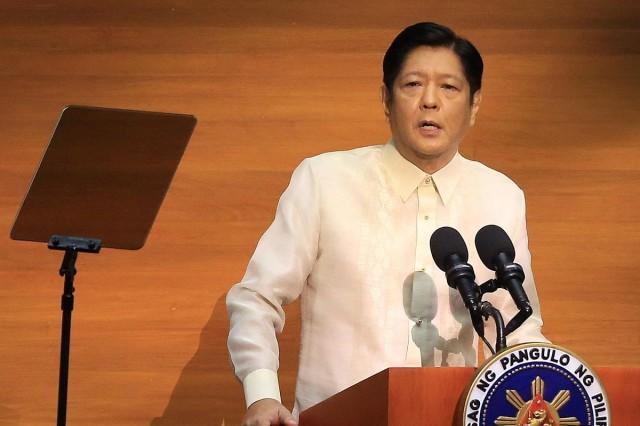
The President also vowed to improve the healthcare system by building more regional hospitals and clinics and improving the training of medical workers.
In the same address, Marcos announced the return of face-to-face classes and tasked then-Education Secretary and Vice President Sara Duterte with overseeing the safe return of students to classrooms.
Marcos also made major infrastructure commitments under his flagship Build Better More program. He pledged to complete the North-South Commuter Railway System, Metro Manila Subway Project, Light Rail Transit (LRT) -1 Cavite Extension, Metro Rail Transit (MRT) -7, and the common station connecting LRT-1, MRT-3 and MRT-7.
Marcos also made his diplomatic stance clear, declaring that the Philippines would not yield a single inch of its territory. The statement carried particular weight amid longstanding tensions between Manila and Beijing in the West Philippine Sea.
At the same time, he maintained that “the Philippines shall continue to be a friend to all, an enemy to none.”
The President also presented Congress with a lengthy list of priority measures, including the National Government Rightsizing Program, Budget Modernization Bill, Valuation Reform Bill, Passive Income and Financial Intermediary Taxation Act, E-Government Act, Internet Transactions Act, and the establishment of a Medical Reserve Corps.
Other priorities included the creation of a National Disease Prevention Management Authority, Virology Institute of the Philippines and Department of Water Resources; reforms to government retirement and pension systems; the National Land Use Act and National Defense Act; mandatory ROTC and the National Service Training Program; an enabling law for the natural gas industry; and amendments to the Electric Power Industry Reform Act and Build-Operate-Transfer Law.
Second SONA, 2023
A year after his first SONA, Marcos turned his attention to another major concern: inflation.
Rising prices had been driven by post-pandemic pressures and the war between Russia and Ukraine. Marcos, who was also serving as Agriculture secretary at the time, pointed to agricultural smuggling as another factor contributing to the problem.
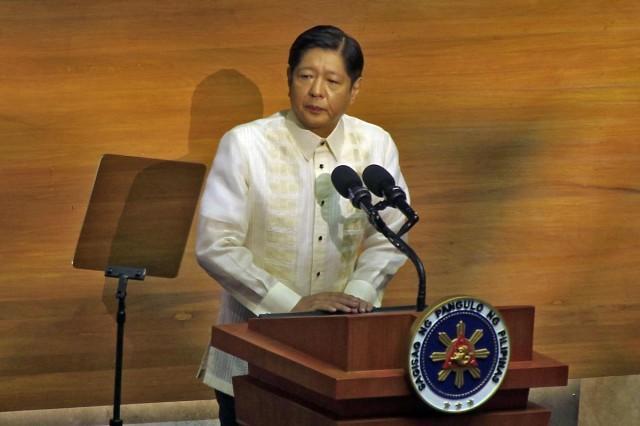
Marcos also touted the P8.3-trillion Build Better More program, saying it was being vigorously implemented and expanded. He cited the Luzon Spine Expressway Network Program, which was envisioned to cut travel time between Ilocos and Bicol from 20 hours to nine.
The address was also Marcos’ first SONA after Congress passed the controversial Maharlika Investment Fund law. He said the fund would be invested in projects that would benefit the country.
“In pooling a small fraction of the considerable but underutilized government funds, the Fund shall be used to make high-impact and profitable investments, such as the Build-Better-More program,” Marcos said.
The 2023 SONA also laid out Marcos’ approach to the illegal drug problem, with the President promising greater emphasis on community-based treatment, rehabilitation and reintegration.
The policy marked a departure from that of his predecessor, former President Rodrigo Duterte, whose bloody war on drugs resulted in at least 6,000 deaths based on government figures.
In a similar move toward reconciliation, Marcos announced amnesty for former rebels who had given up their armed struggle.
Marcos also asked Congress to act on several measures, including tax reforms under the Medium-Term Fiscal Framework and amendments to the Fisheries Code, Anti-Agricultural Smuggling Act and Cooperative Code.
Other priorities included a new Government Procurement Law and Government Auditing Code, measures against financial account scamming, the Tatak Pinoy Act, Blue Economy Act, Ease of Paying Taxes Act, LGU Income Classification Act, and a new Philippine Immigration Act.
Third SONA, 2024
The 2024 SONA was Marcos’ first address following his public falling-out with Sara Duterte, with the Vice President skipping the event and describing herself as the “designated survivor.”
Marcos, however, sought to bring the discussion back to more immediate concerns.
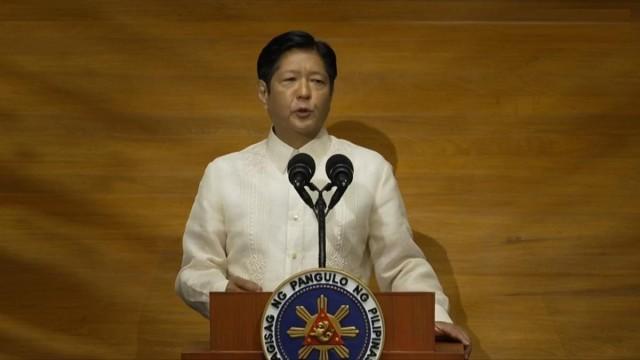
The President acknowledged that while the Philippine economy was performing well on paper, many Filipinos had yet to feel the benefits, particularly as prices remained high amid El Niño-induced droughts and global tensions.
The President highlighted several agricultural and agrarian interventions, including efforts to bring down the price of rice.
The address also came amid developments concerning the country’s maritime claims, with Marcos again asserting Philippine rights in the West Philippine Sea.
“Ang West Philippine Sea ay hindi kathang-isip natin lamang. Ito ay atin. At ito ay mananatiling atin,” Marcos said.
(The West Philippine Sea is not a figment of our imagination. It is ours. And it will remain ours.)
But the 2024 SONA would perhaps be best remembered for Marcos’ declaration of a ban on Philippine Offshore Gaming Operators (POGOs).
POGOs had proliferated in the country during the administration of Marcos’ predecessor and had become linked to various crimes, including human trafficking.
“Effective today, all POGOs are banned,” Marcos declared.
The controversy surrounding POGOs came to a head during a Senate investigation that focused heavily on former Bamban Mayor Alice Guo and raised questions about gaps in the country’s immigration and identification systems.
Marcos did not identify priority legislation in his 2024 SONA.
Fourth SONA, 2025
The moments before Marcos delivered his fourth SONA were akin to the calm before the storm, with Romualdez and then-Senate President Francis “Chiz” Escudero still joining the President during the event.
It was Marcos’ first SONA following the midterm elections, in which the administration slate failed to secure a decisive victory. Only five of Marcos’ Senate candidates won seats, while Camille Villar and Imee Marcos had left his slate.
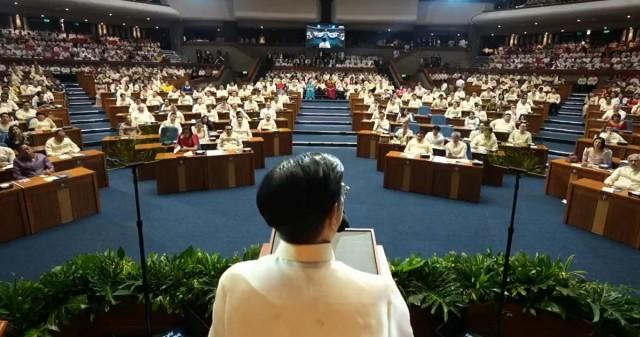
Midterm elections are often treated as a report card on an administration’s performance, and Marcos acknowledged the public’s dissatisfaction during his 2025 SONA.
“Bigo at dismayado ang mga tao sa pamahalaan, lalo na sa mga pangunahing serbisyo,” Marcos said.
(The people have been let down and are disappointed with the government, particularly with basic services.)
Marcos vowed to intensify social welfare programs to address poverty and promised to create more jobs. He also addressed the case of the missing sabungeros, pledging to hold those responsible accountable, while promising a broader crackdown on crime.
The SONA also came after several tropical cyclones battered the country and caused widespread flooding.
It was at this point that Marcos confronted what had become an increasingly contentious issue: allegations that politicians were receiving kickbacks from government projects.
“Mahiya naman kayo sa mga kabahayan nating naanod o nalubog sa mga pagbaha!” Marcos said.
(Shame on you before our countrymen whose homes were swept away or submerged by floods!)
He then ordered the Department of Public Works and Highways (DPWH), then headed by Manuel Bonoan, to submit a list of all flood control projects. The projects were to be reviewed to determine whether they had actually been completed, with Marcos promising to make the list public.
The President also vowed that charges would be filed against officials implicated in irregularities involving flood control projects.
In another move aimed at curbing corruption, Marcos warned that he would return any General Appropriations Bill submitted to him that was not aligned with the proposed National Expenditure Program. He said he was prepared to operate under a reenacted budget if necessary.
The repercussions of Marcos’ declarations would extend well beyond that SONA, with some officials who were present at the address later finding themselves under investigation over alleged corruption, including Romualdez. — MCG, GMA News
What to expect in Marcos' 5th SONA? Political expert weighs in
By Mariel Celine Serquiña, GMA News
President Ferdinand "Bongbong" Marcos Jr. is set to deliver his fifth State of the Nation Address (SONA) on Monday, July 27, but has yet to go into specifics on the key areas he will tackle in his speech before both House of Congress.
In an interview with GMA News Online, Associate Professor Dr. Dennis Coronacion, chair of the University of Santo Tomas (UST) Department of Political Science, gave his expectations of what the President would likely—and unlikely—discuss.
Click here to read more
Political wars
For Coronacion, Marcos is not expected to spend much time discussing the impeachment trial of Vice President Sara Duterte, and the trial of former president Rodrigo Duterte before the International Criminal Court.
"Tingin ko hindi masyado gaano mag-delve diyan 'yung SONA ng Pangulo kasi, since the time that he was campaigning back in 2022… Iniiwasan niya 'yung mga issues," Coronacion said.
(I think Marcos will not delve so much on these issues in his SONA since the time that he was campaigning back in 2022… He has been avoiding issues.)
However, if Marcos ever would do so, Coronacion said the President will likely assert that he has no involvement in the cases facing the Dutertes.
"Baka siguro bahagya lang at mabilis lang (Perhaps he will hardly mention it, and maybe just in passing). But I don't think the President will allocate so much time in his speech," the professor said.
The Senate impeachment court has paused the impeachment proceedings against the Vice President in view of Marcos' SONA and the traditional Kontra-SONA (Counter-SONA) by the Senate minority.
Top issues
What Coronacion does expect the President to urgently tackle achievements and programs related to food, agriculture, and education.
Food security, Coronacion said, has long been one of the country's key challenges, making it one of the President's priority programs.
"Nabanggit niya itong mga 'to noong nakaraang SONA, but, of course, tingnan natin kung ipagpapatuloy niya ito o may mga bago siyang programa upang maisaayos o ma-address ang kanyang problema pagdating food security," Coronacion said.
(He mentioned these in his last SONA, but, of course, let's see if he will continue with existing or present new programs to address the problem of food security.)
Marcos highlighted agricultural development as among his administration's top priorities, promising to bring down the retail price of rice to P20 per kilo.
El Niño threat
When it comes to mitigating the disastrous effects of the looming very strong El Niño, Coronacion noted that measures are already in place.
"Kahit sinong Pangulo, mayroon silang nakahanda na programa upang i-address o ma-mitigate 'yung epekto ng El Niño. It's just that titingnan natin kung what percentage of the proposed budget will be allotted in the agricultural sector," Coronacion said.
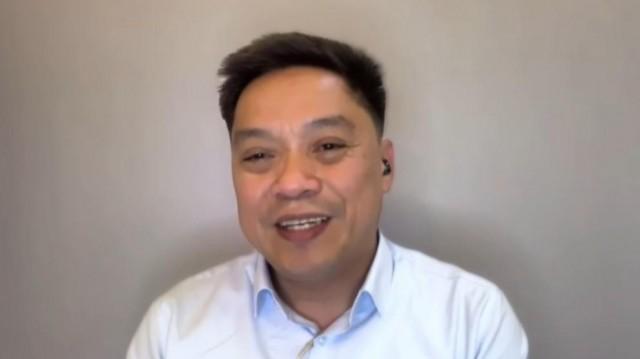
(Every President has prepared a program to address or mitigate the effects of the El Niño. It's just that we have to examine what percentage of the proposed budget will be allotted to the agriculture sector.)
According to PAGASA, the country is expected to experience a very strong El Niño by October 2026 and seen to last until December 2026.
Classrooms, scholarships
Coronacion said the public can also expect that the President to include in his speech areas related to the youth, especially education.
Classroom shortages and hunger among students are high on this list.
He said Marcos may announce additional scholarships, aside from the existing Bagong Pilipinas Presidential Scholars Program (BPPSP).
The BPPSP provides tuition support, stipends, and academic incentives to qualified Senior High School graduates pursuing higher education or technical-vocational courses.
Another big announcement?
One of the highlights of Marcos' 2025 SONA was his "mahiya naman kayo (you should be ashamed)" remark, a battle cry that helped open the floodgates to investigations into corruption in flood control projects.
In 2024, Marcos banned all Philippine offshore gaming operators (POGOs) in the country, after illicit activities such as scamming, money laundering, prostitution, human trafficking, kidnapping, torture, and murder, were linked to their operations.
For this year's SONA, Coronacion said the President's big announcement should focus on his achievements after his 2025 SONA.
"So, ano na ba ang status ng kanyang anti-corruption drive? 'Yung pagiging Mr. Exposé patungkol dun sa corrupt practices na gawa ng kanyang mga politiko?" Coronacion said.
(So, what is the status of his anti-corruption drive? Of him being Mr. Exposé of the corrupt practices done by politicians?)
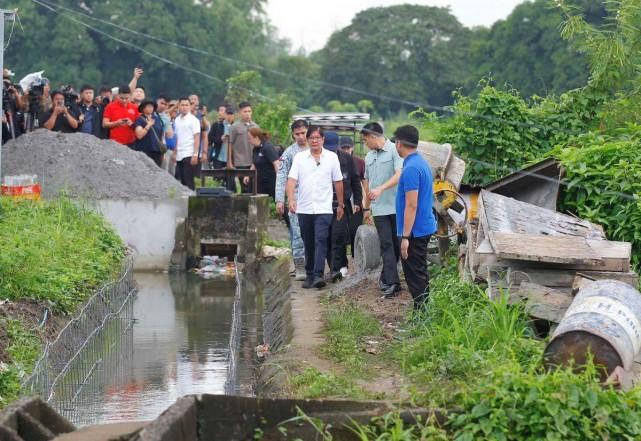
Coronacion said Marcos' fifth SONA should provide an update on the progress of the promises he made in his previous SONA, especially as surveys indicate public dissatisfaction.
"Kasi parang lumalabas based on the surveys (Because based on the survey results), majority of the Filipinos are not satisfied with how you're addressing the corruption issue related to the flood control mess," Coronacion said.
He expressed belief that perceptions of selective investigations and slow progress in pursuing flood control cases reflect badly on the President's survey ratings.
"They're dissatisfied with the measures, the actions of the President with regard to the exposé that he had during his last SONA. Kahit 'yung pagtakbo ng kaso, mabagal (Even the progress of the cases is slow)," Coronacion said.
Economy, fuel prices
Also weighing down on the President's ratings, Coronacion said, are economic issues, oil price hikes, and the quality of labor in the Philippines.
A Pulse Asia survey showed that Marcos' national approval and trust ratings both fell by 7% points, while his disapproval and distrust ratings rose by 5% and 7% points, respectively.
Meanwhile, a Social Weather Stations (SWS) survey in the second quarter of 2026 showed that the President's trust rating declined to 34%.
Further, 45% of Filipinos said they had "little trust" in the President, while 19% remained "undecided."
Anti-Dynasty Bill
Coronacion said the public may also expect for update on the President's Legislative-Executive Development Advisory Council bills, particularly the Anti-Dynasty Bill, Citizen Access and Disclosure of Expenditures for National Accountability (CADENA) Bill, and the Party-list System Reform Bill.
"Kailangan sana natin ito kasi 'pag naipasa ito, magiging gauge 'yan kung sincere ba talaga ang Pangulo natin na ma-eradicate or if not ma-lessen ang corruption sa bansa natin," Cornacion said.
(We need to hear an update on these because once these bills get approved, it will gauge if the President is to eradicate or lessen corruption in our country.)
In June, the House of Representatives passed on final reading an anti-political dynasty bill banning relatives up to the second degree of consanguinity or affinity from running for or occupying a post in the same constituency or jurisdiction.
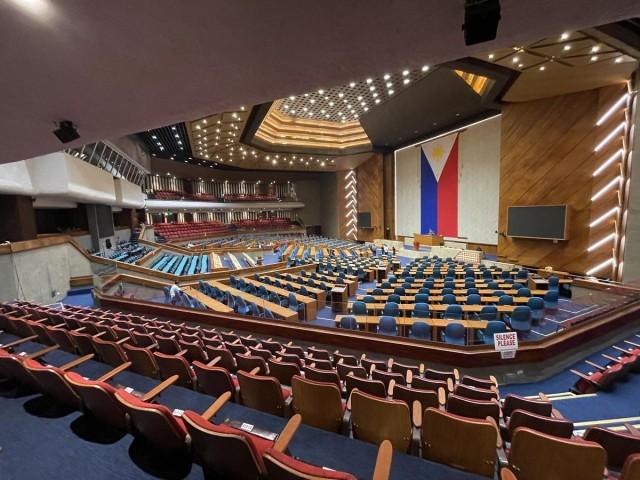
To date, there is no existing anti-political dynasty law, although Marcos earlier urged Congress to prioritize its passage.
Senate President Sherwin Gatchalian has said the Senate will prioritize the anti-political dynasty bill under his leadership.
Also in June, Speaker and Isabela 6th District Representative Faustino "Bojie" Dy III filed a bill seeking to ban members of political dynasties and contractors from being nominated or serving as party-list representatives.
It sought to ban incumbent elected officials and individuals who were awarded government contracts, concessions, franchises, or public-private partnership agreements in the past five years before an election from being a party-list nominee.
West Philippine Sea, fuel crisis
Meanwhile, Coronacion expects the President to be deliberate in tackling foreign policy, particularly in defending Philippine sovereignty in the face of aggression from China.
"Tingin ko magsasalita siya regarding 'yung nangyayari sa West Philippine Sea para ma-boost 'yung morale ng mga members ng Philippine Coast Guard na sinasaktan ng Chinese Coast Guard," Coronacion said.
(I think Marcos will talk about the events related to the West Philippine Sea to boost the morale of members of the Philippine Coast Guard that has been hurt by the Chinese Coast Guard.)

On July 20, a Filipino sailor suffered a head injury after he was allegedly struck with a baton by a China Coast Guard personnel during an incident at Ayungin Shoal. The CCG, however, claimed that it was the Philippine side that initiated the confrontation.
With Filipinos experiencing the impact of the Middle East crisis, the public may expect the President to mention programs to cushion its impact, including the cash assistance to drivers, as well as "zero balance billing" in government hospitals, according to Coronacion.
"I think he's going to expound on that kasi parang 'yun 'yung naging cornerstone of his solution sa poverty sa bansa natin—human capital development," he said, adding that messaging will likely be directed towards drivers, victims of recent typhoons, and other vulnerable sectors.
(I think he's going to expound on that because that has been the cornerstone of his solution to address poverty in our country—human capital development.)
Pax Silica
The professor said it is also possible for the President to tackle the controversial Pax Silica project, a US-led initiative and economic security framework that envisions to create a global supply chain for artificial intelligence and the semiconductor industry.
"If ever the President has to say something to allay the fears of the Filipino public and to address the national security issue that is connected with the Pax Silica," he added.
Various groups have raised concerns over the establishment of the enormous AI center in New Clark City, pointing out that it may raise power rates, pose environmental threats, displacement, and noise pollution.
READ | EXPLAINER: What is Pax Silica and why are people worried?
Critical eye
As Marcos' penultimate SONA draws near, Coronacion challenged the public to be critical and observant of the President's statements.
This would include checking on what the President promised in his 2025 SONA and compare these to statements in his previous SONAs.
"Dapat naman tayong maniwala because these are real figures, government data. But let's always look at the other side. Maging critical tayo, maging mapagmatyag," Coronacion said.
(We should believe in the figures presented because they are government data. But let's always look at the other side. We should be critical and observant.)
"Puwede nating ikumpara 'yung mga figures na sinasabi niya ngayon, puwede nating ikumpara doon sa last year, lalo na doon sa usapin ng flood control mess," he added.
(We can compare the figures he will present to the ones he mentioned last year, especially if it is about the flood control mess.)
Felt by ordinary Pinoys
As the SONA will likely present numbers that paint a positive picture for the country, Coronacion said the President's achievements should also be felt by Filipinos.
"Let's not forget na itong mga data nito supposedly may good impact on the Filipino public. Tingnan nila kung ano pa 'yung kulang," Coronacion said.
(Let's not forget that the data supposedly has a good impact on the Filipino public. The public should look that other things that needs to be done.)
"Tingnan natin kung 'yung areas na hindi covered ng kanyang mga projects o kaya kahit 'yung mga proyekto niya mayroon itong mga pagkukulang (Let us examine the areas not covered by the administration's projects or those that are still lacking)," Coronacion said.
"Let's have a balanced view of the President's report of his achievements," the professor said. — VDV, GMA News
SONA 2026: What you need to know
By Vince Angelo Ferreras, GMA News
President Ferdinand "Bongbong" Marcos Jr. will deliver his fifth State of the Nation Address (SONA) on Monday, July 27, and is expected to report the country's status, achievements, and upcoming plans and priorities.
Section 23, Article VII of the 1987 Constitution states "the President shall address the Congress at the opening of its regular session" while Section 15 of Article VI fixed the date at "fourth Monday of July."
Here's what you need to know about next week's event:
Click here to read more
What time is SONA 2026?
As in previous years, the SONA usually starts at 4 p.m. and lasts one to two hours.
Where will SONA 2026 be held?
The President's SONA traditionally takes place at the Batasang Pambansa Complex, which houses the House of Representatives, in Quezon City.
Who are expected to attend?
The SONA is attended by congressmen, senators, government officials, members of the diplomatic corps, and some special guests. While the Vice President is usually expected to be present, the camp of Vice President Sara Duterte has yet to confirm if she will attend this year's SONA, as the impeachment trial against her is ongoing.
Who will direct SONA 2026?
Marcos' first SONA in 2022 was directed by filmmaker Paul Soriano, whom he appointed then as Presidential Adviser on Creative Communications. But the succeeding SONAs were directed by the "in-house director" of the state-run Radio Television Malacañang (RTVM).
Palace Press Officer Claire Castro said that this year's SONA will not feature celebrities again or any entertainment personalities.
She said the Philippine Charity Sweepstakes Office (PCSO) Chorale will perform the national anthem during the SONA. The group won the Grand Prix title at the Korea International Choir Competition 2026.
Will there be a red carpet in SONA 2026?
There will be no red carpet again in this year's SONA. Guests are also not expected to be in long gowns.
“We encourage guests to wear simple but dignified clothing fit for the occasion,” said House of Representatives Secretary General Cheloy Garafil.
What are alternate routes?
The Metropolitan Manila Development Authority (MMDA) said that heavy traffic is expected along Commonwealth Avenue, IBP Road, and other major thoroughfares adjacent to the House of Representatives.
Here are the alternate routes:
Northbound (Quezon Memorial Circle to Fairview)
- From Elliptical Road (QMC), vehicles should take North Avenue, turn right to Mindanao Avenue then turn right on Sauyo Road or take Quirino Highway going to their destination.
Southbound (Fairview to Quezon Memorial Circle)
- To Elliptical Road (QMC), vehicles from Commonwealth Avenue should take Sauyo Road or Quirino Highway, turn left to Mindanao Avenue, then left to North Avenue going to their destination.
Meanwhile, trucks from C-5 Road or Katipunan Avenue are advised to take the Luzon flyover, then turn right to Congressional Avenue going to their destination.
Light vehicles coming from C-5 Road, on the other hand, should turn left to Magiting, right turn to Maginhawa, left turn to Mayaman, then to Kalayaan going to their destination. —AOL/RSJ, GMA News

