

 GMA Brandtalk
 Tracking
 Archives

ADVERTISEMENT
Filtered By: Topstories
News
'Ulo ng aso': corruption lingo at the Bureau of Customs
They say money talks in graft-ridden government offices. At the Bureau of Customs (BOC) when they talk about grease money, crooked customs personnel have their own lexicon to keep outsiders at bay.
The BOC is one of the country's most corrupt agencies, according to various studies. Corruption has been so engrained in its processes that it has has spawned a strange and ever-evolving lingo to somehow mask illicit transactions.
Take for example "ulo ng aso." When brokers are asked by unscrupulous customs employees to produce "ulo ng aso" in exchange for a signature or two, it means P1,000 in grease money.
A longtime customs broker told GMA News that the term might have been derived from a very tiny image on a P1,000 bill that closely resembles a dog's head with erect ears. Yes, someone spent a lot of time studying the bill.
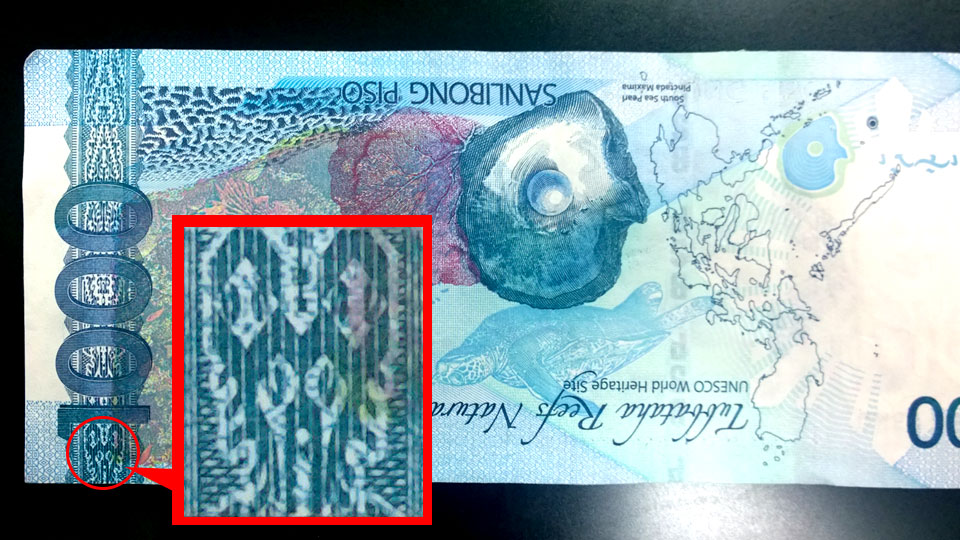
Here's how I first learned about "ulo ng aso."
Months back, we aired a story on GMA-7's newscasts about an entrapment operation within the confines of the BoC head office in Manila.
It stemmed from a complaint by two students who were interns in a brokerage company. The two came knocking at the door of the Customs Public Information and Assistance Division, complaining that a customs employee required an "ulo ng aso" when they asked to have some importation documents cleared.
At first, they had no idea what "ulo ng aso" was. They only found out they were the target of a shakedown after talking with some brokers and the coded message was cracked for them.
The students sought the help of customs officials, and a sting operation followed. The mulcting customs employee was caught red-handed with several "ulo ng aso" in his pocket.
Here's more.
In transacting with the bureau, sometimes a simple "thank you" is not enough. Customs insiders reveal that "thank you" is often equivalent to P3,000.
How about "isang manok."? No, you're not being asked for roasted chicken. "Isang manok" means P1 million pesos.
Heard about "tara."? It's perhaps the most common term uttered in conversations in the bureau. "Tara" is plain and simple grease money.
A senior military official, who was once assigned to a powerful customs office, wrote a concept paper about the corruption in Customs. His paper included a section entitled Customs Jargon on Bribes and Money-Making Schemes.
The officer, who requested anonymity, said he spoke with several brokers and insiders to fully understand the customs vocabulary and come up with a list, a dictionary of sorts.
The whole idea of the concept paper was to educate newbies in their office, including himself, he explained.
Here's just a few culled from the officer's concept paper:
"Baldog" – money obtained from businessmen whose shipment are completely legitimate. Businessmen are threatened anyway, and they are forced to fork out money to avoid delays.
"Basura" (Garbage) – shipment that is sacrificed from time to time to provide Customs with an anti-smuggling accomplishment, and for media presentation.
"Bukol" – when ‘tara’ is unfairly distributed, or some parties are excluded from the distribution of money.
Coffee Money – also called Smiling Money. It refers to money voluntarily given by importers and brokers to build goodwill or to show gratitude for lawful help. This is the reverse of "tara" since it is given voluntarily by a thankful client.
Enrolment Fee – the amount that a ‘player’ gives to a Customs officer to exempt his shipment from alerts and harrassment.
Fridays – Refers to the bonanza time of the week or "Araw ng Pagpapala," the day when the collected "tara"’ is distributed among personnel.
"Gurami" – Filipino term for "small fish," referring to a small-time broker.
"Hatag" - Payola to political patrons
"Hao Siao" – unofficial or informal employee or representative assigned by a customs officer to collect "tara." It can also refer to media personnel who engage in “attack-collect; defend-collect” (AC-DC) arrangements. They can also act as middlemen for brokers, importers or other BOC personnel.
"Nakapatong" – pertains to a transactional relationship where an influential person (a politician or a known media personality) gains a share of profits by attaching his name to a shipment in need of special facilitation assistance. (Ex. Broker: “Boss, naka-patong si _____ dito.”)
OT or OverTime--the payment (amount not clear) to a customs employee for rendering "extra time and effort to process documents or facilitate a transaction."
Picture – A general term for ‘balato’ or share. It may mean that Juan and Juana should be included in the picture, meaning, they get a share of the money.
"Pitcha" – mans to just settle the amount, “perahin na lang.”
Sitting Fee (or Parking Fee) – amount paid to an employee or an office to deliberately delay action. More commonly reported in offices responsible for investigations.
Suki – refers to a Customs examiner or appraiser who has developed a close affinity with the broker for mutually-beneficial arrangements.
"Trabaho" – a smuggling activity, whether outright or technical smuggling.
One jargon might be unique to a particular unit or office, a strategy of sort to keep outsiders in the dark, according to the officer.
Through the years, the language of fraud has evolved, and will most likely remain part of dealings in the BOC for as long as corruption remains unchecked.
In April this year, Customs Commissioner John Sevilla resigned just over a year in office, saying he could no longer stand the "political nature" and continued corruption hounding the bureau.
In April this year, Customs Commissioner John Sevilla resigned just over a year in office, saying he could no longer stand the "political nature" and continued corruption hounding the bureau.
Last year, the bureau missed its full-year collection target of P408.097 billion. The agency earned only P369.314 billion, a shortfall of P38.78 billion. - Analyn Perez/JJ, GMA News

