

 GMA Brandtalk
 Tracking
 Archives

OPINION: Q&A with Dr. Erlinda Susana Cuisia-Cruz on school violence
Recent cases of school violence in the country have alarmed parents, schools, the government including the Department of Education, and the public in general.
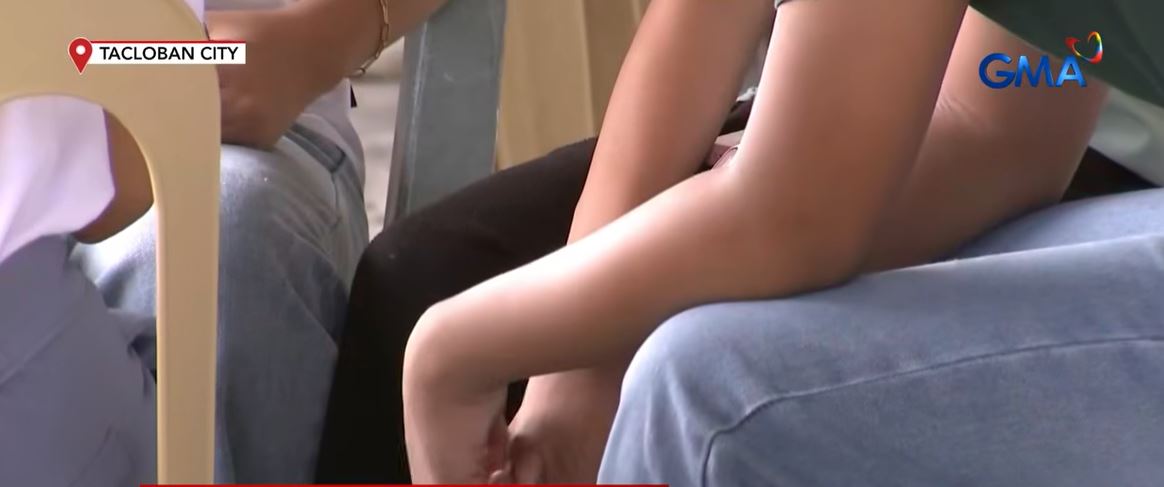
In Tacloban, two minors, one aged 15 and the other, 14, shot randomly at their fellow students inside their school, resulting in three deaths and 20 injuries. The incident caused trauma not just to the students but to teachers and parents as well.
Incidents of stabbing were also reported allegedly committed by minor students on their fellow students in Bacolod City, Floridablanca in Pampanga, Cavite, and Zamboanga City, among others.
Add to these are threats of gun violence and stabbing made allegedly by learners which caused the cancellation of some classes in schools in Batangas City and Escalante City in Negros Occidental, to name a few.
GMA News Online (GNO) asked pediatrician, adolescent medicine specialist, and Ateneo School of Medicine and Public Health assistant professor Dr. Erlinda Susana Cuisia-Cruz to give us insights on what may be going on among Filipino youth and what steps could be taken to address school violence.
GNO: What factors — social, psychological, and environmental — are shaping Filipino youth behavior today?
Cuisia-Cruz: As adolescent medicine specialists, we recognize that youth behavior does not happen overnight. Each adolescent is a product of “nature vs. nurture” even starting from the time of conception.
The Philippine Pediatric Society (PPS) and Philippine Society of Adolescent Medicine Specialists (PSAMS) Joint Statement (June 29, 2026) is explicit: school violence "has no single cause." It is a complex public health issue shaped by a confluence of interacting factors.
Socially, Filipino youth are navigating bullying — both in-person and online. The 2024 Philippines Global School-based Student Health Survey (GSHS) among 13–17 year-olds reveals that 30.2% reported being bullied in school and 22.2% experienced cyberbullying. These are not trivial numbers.
Bullying erodes a young person's sense of safety and belonging, and when unaddressed, it can escalate into retaliatory or displaced aggression.
Family stress and social isolation further compound this — adolescents who lack stable, supportive relationships at home and in their peer groups are significantly more vulnerable.
Psychologically, unmet mental health needs remain a critical driver. Many Filipino adolescents carry silent burdens — depression, anxiety, unresolved trauma, suicidal ideation — that go unscreened and untreated because mental health services remain inaccessible or stigmatized.
When distress has no healthy outlet, it can manifest in harmful behavior toward self or others.
Environmentally, exposure to violence — whether at home, in the community, or through media — normalizes aggression as a conflict resolution strategy. Perhaps most alarmingly, access to firearms is identified in the Joint Statement as a direct environmental risk factor. The presence of a firearm transforms a moment of emotional dysregulation into a potentially fatal one.
Taken together, these factors paint a picture of a generation that is stressed, sometimes isolated, often unsupported — and in some cases, dangerously armed.
GNO: What can you say about the seeming rise in juvenile violent incidents, and what should policymakers and the public be paying attention to?
Cuisia-Cruz: The Tacloban shooting is deeply disturbing, and it must be understood not as an isolated aberration but as a symptom of a broader, measurable public health crisis.
The 2024 Philippines GSHS data should give everyone pause: 42.0% of male and 28.3% of female adolescents aged 13–17 reported being involved in a physical fight at least once in the past year (PPS-PSAMS Joint Statement, June 29, 2026). That means roughly 4 in 10 teenage boys have engaged in physical violence recently.
What policymakers and the public must understand is that violent incidents involving youth are the visible end of a long continuum of unaddressed risk. Before a weapon is ever raised, there are warning signs: withdrawal, declining grades, changes in eating and sleeping patterns, escalating conflicts. Our Joint Statement calls on parents and schools to watch for these precisely because early identification saves lives.
Policymakers need to focus on three systemic gaps:
First, mental health service access is insufficient. Adolescents deserve comprehensive, developmentally appropriate healthcare — including mental health screening — both in health facilities and within their schools. Currently, this is far from universal.
Second, the Juvenile Justice and Welfare Act (RA 9344, as amended by RA 10630) provides a legal framework that is both accountable and rehabilitative. We support its full, consistent implementation. A child-sensitive justice system that prioritizes rehabilitation and restorative justice — not merely punitive response — is what the evidence supports.
Third, gun access in households with adolescents must be taken seriously as a public health matter. The presence of firearms is a named risk factor in our Joint Statement, and policymakers cannot continue to treat this as purely a law enforcement or Second Amendment-adjacent issue. It is a child safety issue.
We also call on the public to resist the impulse to villainize youth involved in these incidents without understanding the broader context. Our Joint Statement is explicit: we "express concern for the adolescents accused in these incidents." The social media coverage must also hold accountability and compassion in dealing with this matter.
GNO: What specific interventions can families, schools, communities, and government take to prevent campus violence and better support Filipino youth?
Cuisia-Cruz: Prevention is only possible through coordinated action — no single sector can do this alone.
The PPS-PSAMS Joint Statement lays out evidence-based recommendations for each stakeholder:
For Families:
The foundation is an open, trusting relationship with your child. Parents and guardians are urged to remain actively involved in their children's lives, foster a safe and nurturing home environment where concerns can be raised without fear, and model calm, emotionally regulated behavior.
Parents should stay engaged with their child's school, discuss bullying and school safety, and seek professional help promptly when signs of emotional distress or mental health concerns arise — not wait until a crisis occurs. Observe behavioral changes: withdrawal, school avoidance, declining grades, or shifts in eating and sleeping patterns are often early warnings.
Simple interventions like spending meals together, listening more than talking, loving but setting limits, paying attention to teaching values like respect for others, selflessness, among others.
For Schools:
Schools must be more than academic institutions — they must be safe spaces. This means anti-bullying policies must be enforced, not just posted. Schools should facilitate access to mental health professionals and ensure students know where to turn. They are also a key site for early identification and referral hence a system for this should be in place.
There should also be programs for mental health wellness that is developmentally appropriate. We want these adolescents to learn in school, but we want them to also want to be in school.
For Healthcare Professionals and Physicians:
We are called to provide adolescent-friendly healthcare that screens not just for physical illness but for psychosocial risk factors — including exposure to violence, bullying, substance use, depression, and suicidal risk — using recommended, evidence-based approaches. We also advocate promoting positive parenting and discouraging corporal punishment, and educating families on healthy media use, firearm safety, and mental health wellness.
For Government:
The Joint Statement calls on government agencies and local government units to improve adolescent-friendly health services, ensure systems are in place to support families, children, and first responders, and strengthen access to psychosocial screening and responsive mental health services. This requires budget allocation, trained personnel, and political will.
For Every Community Member:
Safety is described in our Joint Statement as "a collective responsibility — all hands on deck."
Every Filipino has a role: helping build nurturing environments for youth, being proactive against violence in schools, and supporting responsive management when incidents occur.
The closing message of our Joint Statement encapsulates it best: "Together, let us protect our children. Together, let us build safer schools and healthier communities." That is not rhetoric — it is a public health imperative.
--
Taken from Philippine Pediatric Society (PPS) and Philippine Society of Adolescent Medicine Specialists (PSAMS). Joint Statement on Recent Incidents of School Violence. June 29, 2026. Statistics cited from the 2024 Philippines Global School-based Student Health Survey (GSHS), ages 13–17. Legal references: Juvenile Justice and Welfare Act, RA 9344 as amended by RA 10630.
---
Dr. Erlinda Susana S. Cuisia-Cruz is a pediatrician and adolescent medicine specialist who has dedicated her career to serving young people in the Philippines. She is also an educator, committed to educating the next generation of healthcare providers. She currently serves as the head of the Division of Adolescent Medicine at the Philippine Children's Medical Center in Quezon City. Cuisia-Cruz is also the outgoing vice-president of the Philippine Society of Adolescent Medicine Specialists. She contributes to medical education as assistant professor at the Ateneo School of Medicine and Public Health.

