

 GMA Brandtalk
 Tracking
 Archives

Quiboloy extradition 'extremely unfeasible' —Topacio
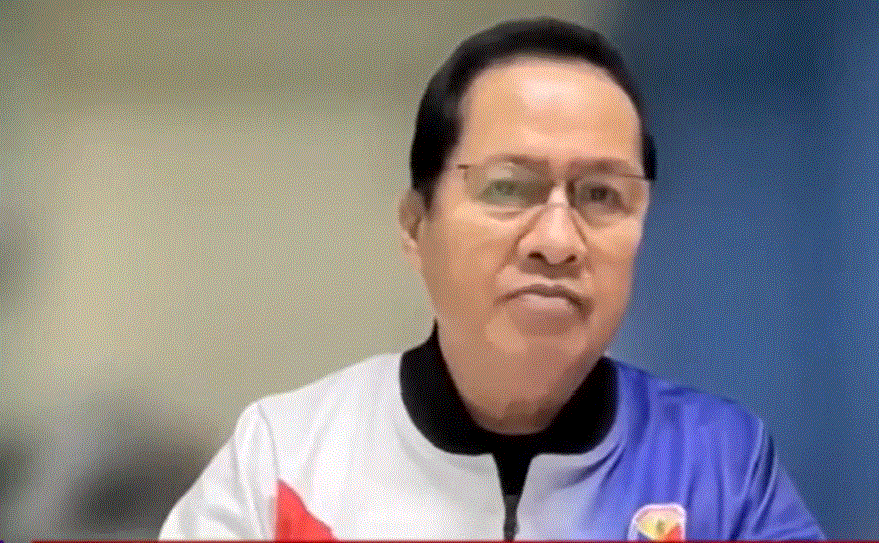
The extradition of Kingdom of Jesus Christ (KOJC) founder Apollo Quiboloy to the United States (US) is extremely unfeasible due to his pending cases in the Philippines, his lawyer Ferdinand Topacio said Friday.
“Kung ang isang tao po ay may kasong nililitis na kriminal, halimbawa po dito sa Pilipinas, usually po ay tinatanggihan po ‘yan at hinihintay po na matapos ang paglilitis dito o kaya magserve ng sentence kung ang isang tao ay mahahatulan," Topacio said in an interview on Super Radyo dzBB.
(If a person is facing a criminal case that is currently being tried, for example, here in the Philippines, the extradition request is usually denied, and they are required to wait until the trial is concluded or, if convicted, until the sentence is served.)
This comes following the US government’s request to extradite Quiboloy over sex trafficking and racketeering charges that he is facing abroad.
Topacio, however, said that the judiciary may still grant the request.
He also said that their camp has yet to receive a notice or formal summons regarding any extradition proceedings.
The lawyer said they will answer the petition. He said that Quiboloy cannot be extradited until the court’s decision is final and executory.
According to Topacio, Quiboloy will meet with his lawyers today to formulate their legal strategy.
Quiboloy is currently facing a non-bailable qualified human trafficking charge under Section 4(a) of the Anti-Trafficking in Persons Act of 2003, as amended, before the Pasig court.
The Davao City-based religious leader is also facing charges under Section 5(b) and Section 10(a) of the Special Protection of Children Against Abuse, Exploitation, and Discrimination Act.
However, international law expert Ralph Sarmiento said that though the court can decide on the extradition, it is still the prerogative of the executive branch.
"Even after the regional trial court decides or issues an order for the extradition, ultimately it will still be the prerogative of the Philippine government, particularly the executive branch through the President, how they will execute the extradition," he said in a separate Super Radyo dzBB interview.—AOL, GMA News

