

 GMA Brandtalk
 Tracking
 Archives

How Marcos' digital plans have fared, a year after SONA 2025
In his 2025 State of the Nation Address (SONA), President Ferdinand "Bongbong" Marcos Jr. reiterated his desire for a country with stronger internet connectivity. One year later, how has his administration fared in realizing this goal?
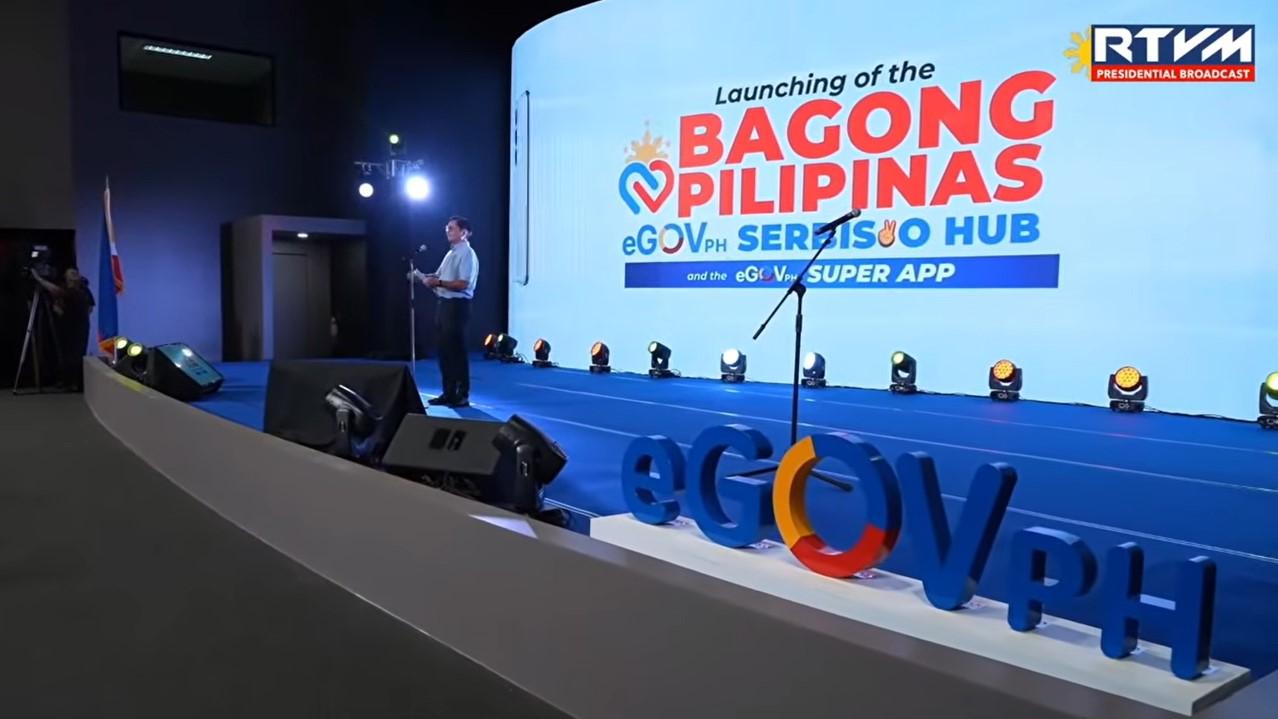
Marcos has repeatedly pushed for digitalizing services since the start of his term. As part of this effort, the eGovPH app was launched in 2023. About 40 government services were available on the platform as of 2025.
During his last SONA, Marcos said government documents can be processed on the app, while IDs can also be renewed.
By 2026, the eGovPH app saw its usage surge by 700%, having processed 800 million transactions since its launch, according to the Department of Information and Communications Technology (DICT).
The app, which integrates 1,300 government services, has been downloaded 56 million times as of posting time.
However, this success has not come without challenges.
Digital hiccups
In April 2026, the eGovPH app experienced some downtime due to the surge in user activity. The app was down for as long as two days for some users.
After the issue was resolved, the DICT said it would expand its servers to make sure the incident does not happen again. Their agency is currently asking for a P2.7-billion budget for e-government initiatives.
Free Wi-Fi
During his SONA speech in 2025, Marcos also touted several efforts to improve internet connectivity in the Philippines, including free Wi-Fi sites and the continued distribution of free SIM cards with data to schools. Marcos said the government was able to increase the number of free Wi-Fi spots from 4,000 in 2022 to almost 19,000 as of 2025.
DICT Secretary Henry Aguda later explained that these Wi-Fi sites were placed across 6,183 geographically isolated and disadvantaged areas.
During his 2025 SONA, Marcos also said the National Fiber Backbone—the DICT's flagship, government-owned broadband network project—was also in the final stages.
Last June, the DICT said it was finally able to launch the first phase of the Mindanao Integrated Government Network, which is part of the National Fiber Backbone Project.
Efforts to make internet accessible were not limited to the Executive branch.
Konektadong Pinoy
In 2025, Congress passed the Konektdong Pinoy Bill—a landmark measure that sought to allow data transmission plates to operate without a legislative franchise. The measure, which was supported by the DICT, sought to enable the telecom industry to be more competitive and accessible.
Several major industry players, however, were opposed to it and have said they were ready to challenge its constitutionality before the courts should it be enacted.
Advocacy groups also expressed opposition to the bill, citing concerns over cyber security, data privacy, and the proliferation of online gambling.
Amid the debate over its merits, the President did not sign the Konektadong Pinoy bill, allowing it to lapse into law in August 2025. — VDV, GMA News

