

 GMA Brandtalk
 Tracking
 Archives

SC dismisses indirect contempt petitions vs. Cendaña, Heydarian, Gadon
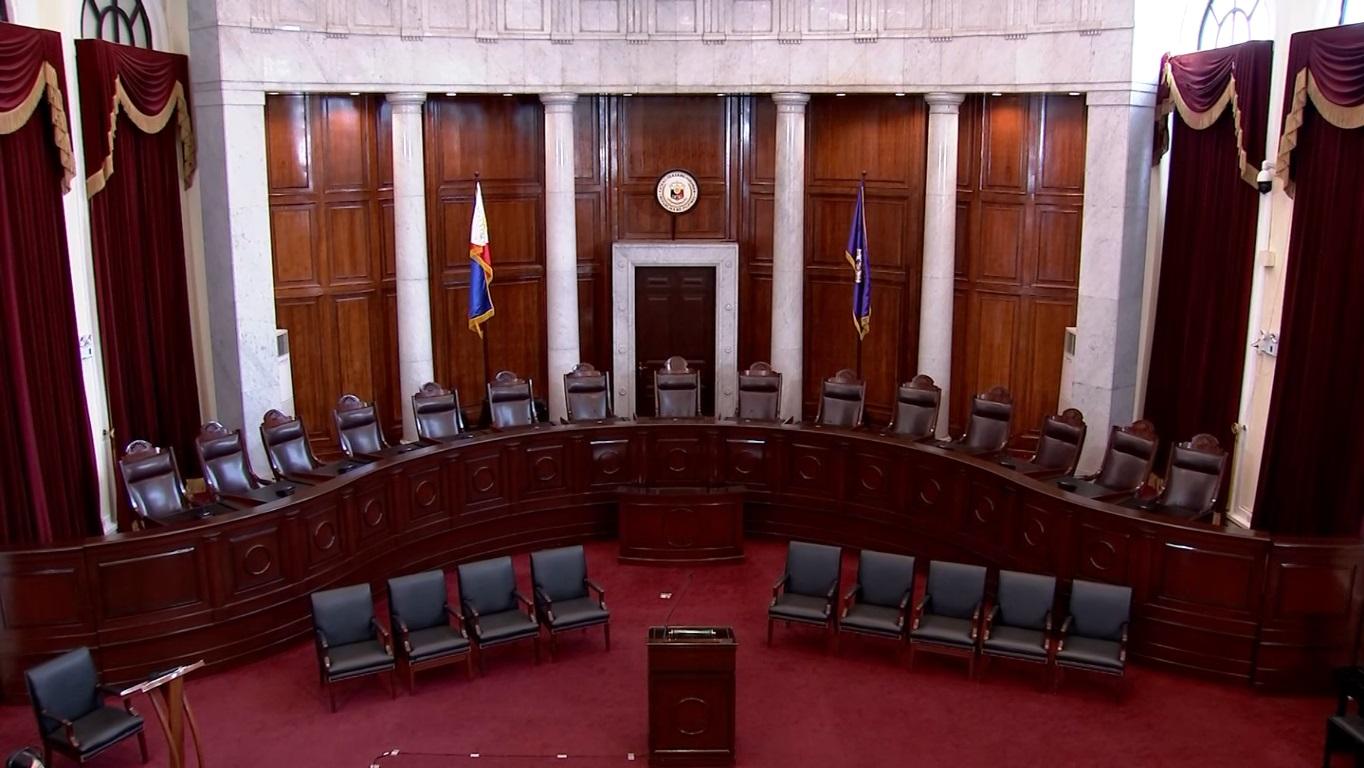
The Supreme Court (SC) has dismissed petitions seeking to cite three individuals in indirect contempt for criticizing its ruling that declared the Articles of Impeachment against Vice President Sara Duterte unconstitutional.
In an 87-page decision, the SC En Banc dismissed the petitions separately filed by lawyers Mark Tolentino, Rolex Suplico, and Ferdinand Topacio against political analyst Richard Heydarian, Akbayan Partylist Representative Percival Cendaña, and Presidential Adviser for Poverty Alleviation Larry Gadon.
“[T]he Court affirms its commitment that public discussions on matters of paramount public interests should be free,” it said.
“There should be space for democratic discourse where the people are given the widest latitude to express their opinions without fear of being subsequently punished,” it added.
To recall, in July 2025, the SC ruled unanimously that the Articles of Impeachment are barred by the one-year rule under Article XI Section 3 paragraph 5 of the Constitution. Moreover, it ruled that the articles violate the right to due process.
Following this, Gadon called the SC a "tuta" (lapdog) of the Dutertes.
Meanwhile, Heydarian said that former President Rodrigo Duterte appointed majority of the justices of the SC while Cendaña said the SC reduced itself to "being the Supreme Coddler of Sara Duterte."
In its ruling, the High Court explained that contempt of court is any act that defies the court’s authority, justice, or dignity. It includes disobedience to court orders and conduct that tends to bring the court into disrepute, interfere with the administration of justice, or prejudice against litigants and witnesses during proceedings.
It said that indirect contempt is “perpetrated outside of the sitting of the court” and punishable acts are “beyond the personal knowledge or perception of a judge.”
The SC used the incitement test, where speech or expression may only be restricted if it is “directed to inciting or producing imminent lawless action; and is likely to incite or produce such action.”
It said it looked at not only what was literally stated but also considered the speaker’s intention and the speech’s effect on the intended audience and whoever may be listening.
The Court said it found that the respondents’ statements are “constitutionally protected freedoms.”
“A review of the petitions reveals that the allegations are nothing more than hollow assertions, which are devoid of factual or legal substance,” it said.
“The petitions do not demonstrate a direct and substantial link between the impugned statements and any actual tendency of inciting the public to, likely and imminently, obstruct, degrade, or interfere with with the orderly administration of justice,” it added.
For Heydarian, it aid that while he is a political scientist, academic, and journalist, his statement was released as part of the public.
“From the text itself, respondent Heydarian’s statement does not suggest any inciting or rallying to commit lawlessness. There is also no likelihood that it shall produce imminent lawlessness,” it said.
It noted that Heydarian invited his followers to consider the nuances of the Court’s decision. The SC urged Heydarian to approach the composition of the Court with a deeper and more nuanced understanding, saying that decisions are not determined by the manner of appointment.
Meanwhile, the SC said that Cendaña appeared that he was rallying the public to lose trust and confidence in the judiciary through his remark. It said his statement must be assessed whether it will have the intended effect.
It said it did not find that Cendaña intended to impede, obstruct, or degrade the administration of justice that would warrant his citation for indirect contempt.
“To the larger portion of the public, it can simply be perceived as a knee-jerk political statement. We also note the observation of Associate Justice Caguioa during the deliberations that high emotions are common after the Court decides on controversial cases,” it said.
“Nevertheless, speech uttered in response to these decisions does not automatically disrupt the Court’s administration of justice,” it added.
Despite this, the SC said that Cendaña should have treated the court with respect.
“A respectable legislator's discussion of public affairs should reflect their deep rumination and dispassionate analysis of issues, free of backhanded insults. It is unfortunate that respondent Cendaña failed in this regard,” it said.
As for Gadon, the SC found that his remark, “while harsh and intemperate,” was an expression of opinion made in the context of public discourse.
“Respondent Gadon’s remark, though arguably disrespectful, was not directed at obstructing judicial proceedings nor intended to influence the outcome of any pending case,” it said.
The SC noted Gadon’s numerous administrative cases for his remarks.
It said that the Court’s jurisprudence and collective record speaks more than any insult.
“The Court has always been receptive of legitimate criticisms. We hope that respondent Gadon, in the exercise of his freedoms, will continue to engage critically not only with our decisions, but also with the pressing issues confronting our nation,” it said.
“This Court reminds him to be critical and ground his commentaries with civility and fairness, and directed through proper fora,” it added.
Meanwhile, the SC warned that there is no license for anyone to abuse their freedom of speech.
It said it will not hesitate to punish those who utter false comments.
“However, political speech must amount to the level of not only inciting the public to lose trust in the Judiciary, but the circumstances must also be assessed as to whether the communicative impact of the speech can imminently result to the intended outcome of the speaker,” it said.
“In wielding our inherent power of contempt, this Court should also be wary and discerning of attempts of others to suppress critical speech that feeds democracy,” it added. — BM, GMA News

