

 GMA Brandtalk
 Tracking
 Archives

Pinoys in Thailand say they’re safe and sound despite coup
At any given night, Walking Street in the city of Pattaya in Thailand is bustling with activity, packed to the seams with camera-toting tourists, both foreign and local, all checking out the various entertainment hubs the area has to offer – seafood restaurants, live music venues, beer bars, discothèques, sports bars, nightclubs and even brothels.
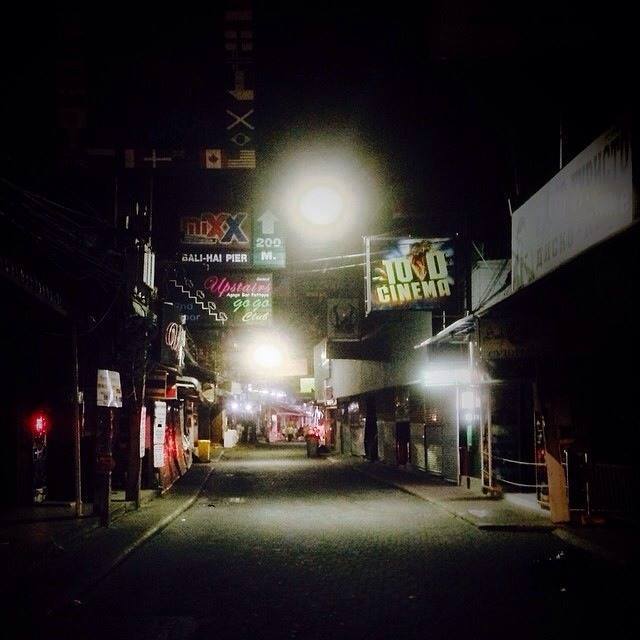
Ever since May 22, however, the place sits empty and brooding at night, looking more like the set of an Asian horror movie than Las Vegas' less affluent cousin in the far east. On that day, Thailand's military seized control of the entire country – a necessary move, according to its chief, to restore stability after almost seven months of political deadlock and violence. It was the country's 12th military takeover since 1932.
‘Confusing, exaggerated’
Despite the protests and the arrests, Thailand, particularly the capital Bangkok, “is still a safe and fun place to be,” said Grace J. Nabong, a contract artist at the Centara Grand Hotel located at the heart of the city. “Media could be very bad and confusing, unless you hear it from someone who actually lives here in the city.”
Mechie Alicaway-Sotto, a teacher based in Bangrak, one of Bangkok's 50 districts, agreed. She described reports reaching the Philippines – as narrated to her by relatives – as “exaggerated.”
“Despite of the political turmoil, Filipinos here in Thailand are safe,” shared Sotto, who teaches Social Studies at Assumption College Bangrak, via Facebook. “As what I've observed after the coup was declared, it was still the same but there were adjustments because of the curfew.”
The curfew – originally from 10 p.m. to 5 a.m. but later relaxed to 12 a.m. to 4 a.m. to cushion the expected negative impact on tourism – explains why areas like the Walking Street are virtual ghost towns midnight onwards.
Business as usual
But except for deserted streets and closed bars, shops and restaurants late at night, life is pretty much “business as usual” among Filipinos in Thailand.
“We're still safe here and we go to work as normal,” said Tina Alibaya, a teacher in Nonthaburi, a province 45 minutes away from Bangkok. “Curfew still ongoing so we make sure we arrive home before [it starts].”
Bangkok-based Nico Sepe, who has been living in Thailand with his family for three years, said Filipinos in Thailand are generally out of harm's way “unless you go to the demonstration and hang about in the middle of the warring factions.”
“I was here at the start of all this political upheavals and to be honest there was really no direct threat to the people,” he said.
For Nabong, who had personally witnessed a large protest action just outside the hotel she was working at earlier this year, work and life at the capital, understandably the center of the political storm, “go on as normal.”
“My place is still packed with people who never seem to care about what's going on, locals and foreigners,” she said.
The Philippine government, which has hoisted Crisis Alert Level 2 in Thailand following the coup, has discouraged Filipinos there from joining any political activities. Under alert level 2, Filipinos are instructed to restrict non-essential movements, avoid public places, and prepare for possible evacuation when necessary.
Repatriation
Though they appreciate the government's concern, some said they feel no pressing need to come home or seek repatriation, at least for the meantime.
“For me, there's no reason to go back home because again it's safe to work here so long as you have the work permit,” said Sotto, the Social Studies teacher from Bangrak.
Sepe said although the situation does not yet call for mandatory repatriation, the Philippine government, particularly the Department of Foreign Affairs, should be ready for any eventualities.
“If ever this thing will escalate to the worst, it will be great if the Philippine Consulate will have a plan to help the Filipinos living here as long as they [Thai military] will not close the airport,” he said.
For Nabong, life in Manila offers a far scarier prospect.
“I would be scared to go to Manila with all the holdups, snatchers and killings going on,” she said. — BM, GMA News

