

 GMA Brandtalk
 Tracking
 Archives

Group calls for laws vs. poverty to support IATF's national food policy
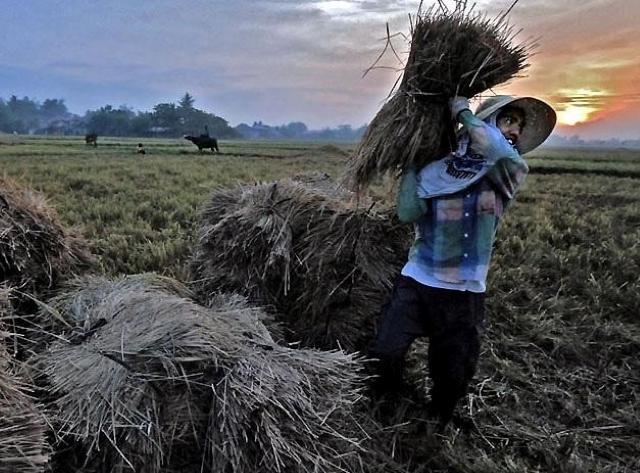
A coalition of anti-hunger advocates is calling for the passage of laws it claimed would ensure the implementation of the government's priority concern to fight poverty in the country.
"We want to help the nation’s leaders push the right policies regarding [hunger and poverty]," said Aurea Miclat-Teves, president and convener of the National Food Coalition.
She said "actions must be taken" to implement the government's National Food Policy (NFP) that is supposed to address the priority concerns of hunger and poverty in the country.
On December 4, the Inter-Agency Task Force on "Zero Hunger" concluded a series of consultations with stakeholders in government and in the private sector on the NFP.
Cabinet Secretary Karlo Nograles, who heads the task force, said the five-part consultation sought for inputs, comments, and suggestions on the government's NFP, which was launched last October 16.
Representatives from academe, non-governmental and religious organizations, civil society groups, and local government units joined the consultation.
"We conducted the consultations thoroughly with as many partners as possible because we wanted a comprehensive and doable set of solutions," said Nograles.
"We also wanted all stakeholders to actively participate in enforcing the NFP based on their own inputs,” he said.
Meanwhile, Teves said that while the government has established the task force, "there is a need for legislation to make the national food policy sustainable."
She said a law upholding the right to food and nutrition or RTFN can compel the government "to provide adequate food for all Filipinos at all times."
"This could also serve as a legal back-up to any economic and social program on hunger and poverty," she added.
She noted that the right to food and nutrition "is not yet explicitly recognized in the Philippine Constitution," unlike political rights and civil liberties.
"Various laws pertaining to food are non-complementary, inadequately and improperly implemented, incoherent and sometimes in conflict with each other," Teves pointed out.
Thus, Teves said, "We earnestly request the Duterte administration to certify as urgent the Right to Adequate Food Framework Bill, or the Zero Hunger Bill, now pending in the House and the Senate."
More over, she said there is also a need to pass a new agrarian reform law that will respect the rights of indigenous peoples while ensuring the modernization of the country's agriculture and fisheries sectors.
She noted that rights of indigenous peoples are "disrespected" as big mining companies violate ancestral domains and destroy tribal lands, resulting in their dislocation.
"The twin goals of achieving equity and productivity have been sidelined, leaving our marginalized sectors, especially our indigenous peoples, farmers and fisherfolk, still hungry and impoverished," said Teves.
Citing Philippine Statistics Authority data, Teves said the country's estimated poverty rate was 16.6% in 2018 and 17.6 million people faced extreme poverty.
According to the World Food Program, factors such as climate issues and political challenges have contributed to the food insecurity that Filipinos continuously face.
According to a Social Weather Stations survey conducted in September, more than seven million Filipino households have experienced involuntary hunger at least once from June to August this year.
The SWS survey showed that families who experienced hunger due to lack of food reached a new record-high of 30.7 percent. This figure surpassed the previous peak of 23.8 percent in March 2012. —LBG, GMA News

